
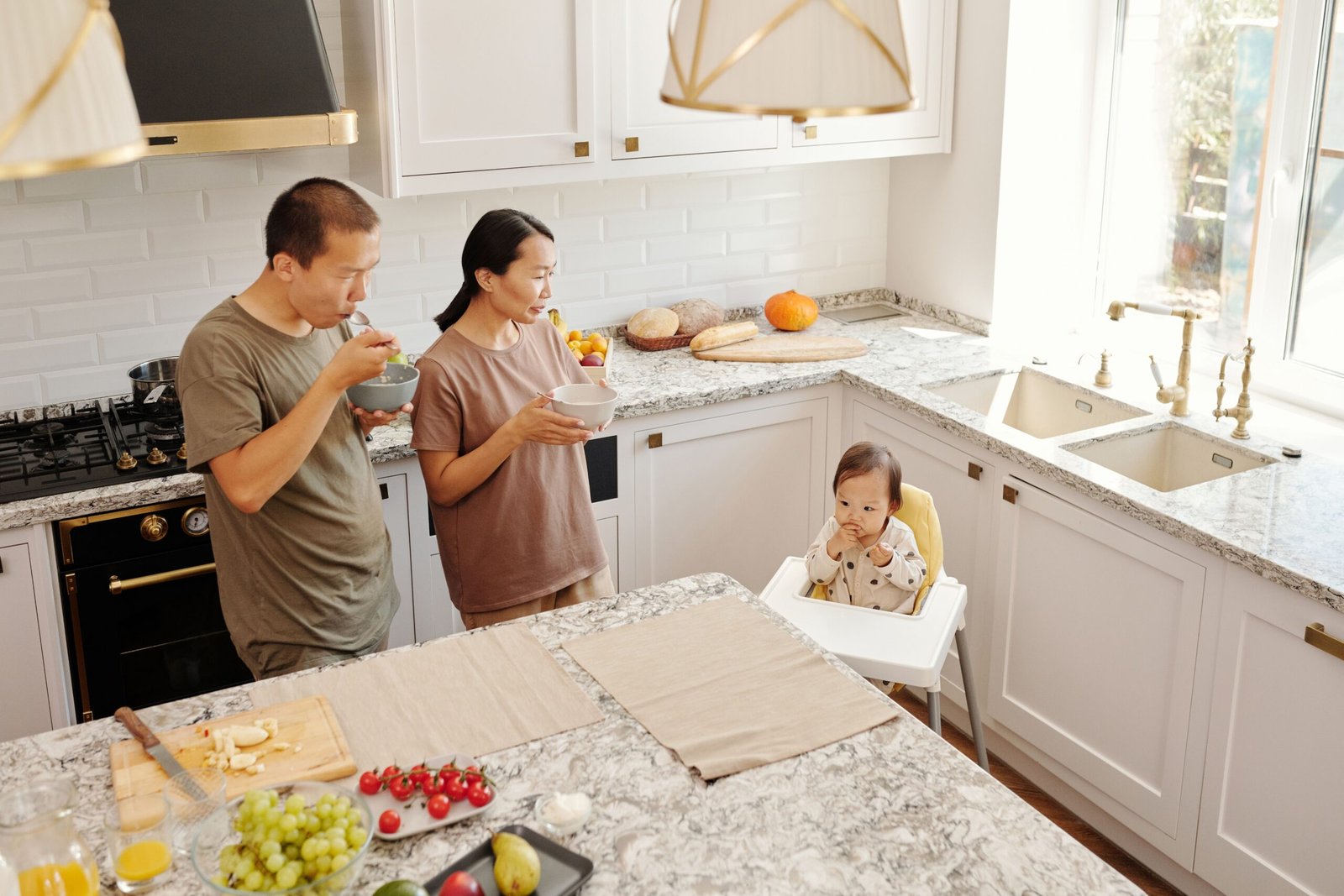
A home that feels perfectly suited to a household today can feel surprisingly restrictive a few years later. Children grow, work habits evolve, hobbies emerge, relatives move in, and daily routines take directions nobody anticipated during the original design process. Many homeowners discover that the challenge is not a lack of space. The real issue is that the space no longer aligns with the way the family actually lives.
The most successful homes tend to share one characteristic: adaptability. They are designed with the understanding that family needs will change. Rather than forcing every life transition to fit within a rigid layout, adaptable homes create room for evolution. The goal is not to predict every future scenario, but to create an environment capable of responding to new circumstances without requiring constant reinvention.
Kitchen Evolution
Few spaces reveal changes in family life as clearly as the kitchen. A household that once relied on quick meals between activities may eventually spend significant time cooking together. A family with young children may prioritize supervision and accessibility, while later years might revolve around entertaining, meal preparation, or accommodating multiple people using the space simultaneously. The kitchen often becomes a visual record of how routines, priorities, and relationships have evolved.
Many homeowners initially believe they need additional square footage when what they really need is a different configuration. Traffic flow, storage access, seating arrangements, and workspace functionality often become more important than size alone. This realization is often why families reach out to a kitchen remodeling company after noticing growing frustration with everyday routines. Remodelers can help plan and execute all the essential changes needed to make the kitchen more usable for a changing family.
Privacy and Connection
One of the most interesting challenges in modern home design involves balancing two competing priorities. Families want opportunities to connect, yet individual family members increasingly need personal space as schedules, responsibilities, and interests become more diverse. A layout that supports togetherness during one life stage may begin feeling crowded or restrictive during another.
Homes that adapt well to changing family needs often create layers of interaction rather than relying on a single gathering space. Shared areas remain important, but equally valuable are spaces that allow family members to work, relax, study, or recharge independently. Some moments call for connection. Others require separation. A home that successfully accommodates both tends to remain functional across a much wider range of family circumstances.
Remote Work Balance
Remote work has changed the way many families think about their homes. A room that once served a single purpose may now support professional responsibilities, virtual meetings, focused work sessions, and family activities throughout the same week. The
Dedicated offices remain valuable, but many families are discovering that adaptable work areas provide greater long-term usefulness. A workspace may eventually become a guest room, hobby area, study zone, or multipurpose retreat. Designing with that possibility in mind creates a home that responds to changing needs rather than becoming tied to a single moment in time.
Flexible Rooms
Children have a remarkable ability to change the purpose of a room without changing the room itself. What begins as a nursery eventually becomes a play area, then a study space, and later a retreat designed around completely different interests. A rigid design often struggles to keep pace with those transitions, forcing homeowners into repeated updates simply to maintain functionality.
Flexible rooms approach the issue differently. Instead of being built around a highly specific purpose, they are designed around adaptability. Storage solutions, furniture arrangements, technology needs, and layout decisions can all support future changes without requiring major renovations. Families benefit because the home evolves alongside the people using it.
Multigenerational Planning
Multigenerational living is becoming increasingly common, whether through long-term arrangements or temporary transitions. Aging parents, adult children, extended family members, and changing financial circumstances can all influence household composition. Homes designed solely around a traditional family structure sometimes struggle to accommodate those changes comfortably.
Thoughtful planning creates opportunities for both connection and independence. Separate sleeping areas, flexible common spaces, accessible layouts, and adaptable room functions allow multiple generations to coexist without feeling crowded or disconnected. The most effective solutions rarely involve dramatic changes. Instead, they focus on creating options.
Outdoor Adaptability
Outdoor spaces often reveal how family priorities change over time. A backyard that once revolved around children’s play equipment may later become a gathering space for teenagers, a location for family celebrations, or a quiet area for relaxation. The most useful outdoor environments are designed with enough flexibility to support different stages of family life.
Open lawn areas, adaptable seating arrangements, shaded gathering spaces, and multifunctional zones create opportunities for different uses without requiring significant redesign. Families change, routines change, and recreational interests change. Outdoor spaces that can accommodate those transitions tend to provide lasting value because they grow alongside the household rather than becoming outdated.
Aging in Place
Many homeowners think about accessibility only after it becomes necessary. A more effective approach considers comfort and long-term usability much earlier. Family needs rarely move in a single direction. Children grow older, parents age, mobility requirements change, and daily routines evolve. Homes that anticipate those possibilities often adapt far more successfully over the years.
Aging in place is not simply about accessibility features. It reflects a broader design philosophy focused on long-term functionality. Wider circulation paths, adaptable living arrangements, practical layouts, and thoughtful room placement create environments that remain useful across different life stages. Families benefit because future adjustments become less disruptive.
Life Milestones
Some of the biggest home design decisions occur after major family milestones. The arrival of a child, a teenager gaining independence, a career transition, an empty nest, or retirement can all influence how a household uses its space. What once felt perfectly organized may suddenly feel misaligned with daily life.
Milestones create natural opportunities to reevaluate how effectively a home supports current priorities. The most adaptable homes are not necessarily the largest or newest. They are the ones capable of responding to change without losing functionality. Every family experiences transitions differently, yet nearly all households encounter moments when the relationship between people and space begins shifting.
Building a home that keeps up with changing family needs is less about predicting the future and more about preparing for it. Family life evolves through new routines, changing responsibilities, shifting interests, and important milestones that influence how space is used. Homes that prioritize flexibility, adaptability, and long-term functionality tend to remain valuable through those transitions.
Leave a Reply