
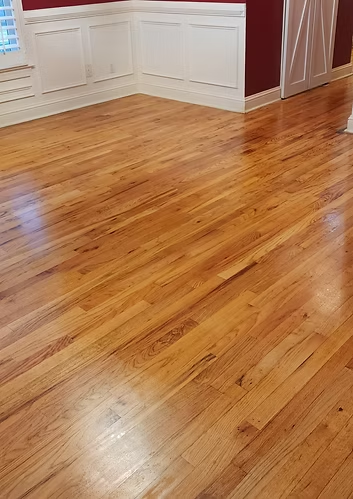
You stopped noticing months ago. That’s how it works with floors; you walk across them a hundred times a day, and the gradual dulling registers as normal rather than as change. Then someone visits, or you move a rug, or you see a photo from three years ago, and suddenly the difference is obvious. Waiting past that point usually costs more than acting on it.
Timing matters here more than with most home maintenance, because there’s a window where refinishing is possible and a point past which boards need replacing. Knowing which side of that line you’re on determines whether this is a weekend project or a considerably larger one.
Here are the seven signs worth watching for the specific indicators that separate a floor genuinely due for refinishing from one that’s just showing a little wear.
Sign One: The Finish Has Worn Through in Traffic Paths
The most reliable early indicator is a visible difference between where people walk and where they don’t. Look at the path from the door to the kitchen and compare it to a corner behind furniture, and the contrast is usually stark once you’re looking for it.
Worn paths mean the protective layer is gone in those areas and the bare wood is exposed to whatever comes next. This is the ideal moment to refinish, since the wood underneath is typically still sound. Waiting means the exposed sections start absorbing moisture and staining, which changes the job substantially.
Sign Two: Water No Longer Beads on the Surface
This is the simplest test available and takes ten seconds, requiring nothing more than a glass of water and a few minutes of patience.
- Test the walking area directly: put a few drops of water on a worn area, particularly high-traffic spots, and watch how it behaves over the next minute or two
- Intact finish: holds water in beads on the surface, keeping moisture from ever reaching the wood grain underneath
- Compromised finish: lets water soak in almost immediately, darkening the wood directly beneath the surface in a way that’s often visible right away
- The real risk of absorption: once water absorbs rather than beads, every spill from that point forward is reaching bare wood, and the resulting damage accumulates far faster than most homeowners expect
If water absorbs rather than beads, the walking area has no meaningful protection left, and continuing to treat it like a sealed surface only accelerates the wear already underway.
Sign Three: Scratches Reach Into the Wood, Not Just the Finish
Surface scratches in the finish are normal and often buff out. Scratches that catch a fingernail or show lighter wood at the bottom have penetrated further, which means they’ll need sanding rather than recoating.
Distinguishing between the two determines whether a light screen-and-recoat will suffice or whether full floor refinishing is warranted, and it’s worth having someone assess that in person rather than guessing, since the two jobs differ considerably in cost and disruption. Running a fingernail across a handful of the deepest-looking scratches in a few different spots on the walking area gives a reasonable first impression before calling anyone out for a closer look.
Sign Four: Gray Patches and Dark Stains Have Started Spreading
Discoloration can be more than a cosmetic issue. Gray patches may indicate that moisture has reached the wood beneath the finish, while darker or black stains can signal deeper moisture damage. In some cases, prolonged moisture exposure can also create conditions where mold or mildew develops beneath the surface.
The depth of the staining matters when determining the appropriate treatment. Some surface-level discoloration may be removed through sanding and refinishing, while deeper stains may remain even after sanding and could require replacing individual boards. Addressing discoloration early can help prevent a minor hardwood floor refinishing project from becoming a more extensive repair. A professional assessment, such as an in-person evaluation from Truman’s Hardwood Floor Cleaning & Refinishing, can help determine the extent of the damage and the most suitable approach.
Sign Five: Boards Are Cupping or Showing Gaps
Both cupping and gapping point to an environmental problem rather than a finish problem.
- Cupping: board edges sit higher than centers, indicating a moisture imbalance between the top and bottom of the wood
- Gaps between boards: suggest the opposite, that the wood has dried and contracted
- Refinishing without addressing moisture: treating either symptom without fixing the underlying source means the floor will simply do it again
- The risk of sanding too early: sand a cupped floor flat while it’s still cupped, and you’ll end up with a crowned walking area once moisture normalizes, which is worse than where you started
Both point to an environmental problem rather than a finish problem, and refinishing before addressing the underlying moisture source means the floor will simply do it again.
Sign Six: You’re Past the Ten-Year Mark Without Attention
Age alone is a reasonable prompt to have floors assessed, particularly in high-traffic homes. It’s also worth knowing that refinishing involves real chemical exposure. The EPA notes that volatile organic compounds are emitted as gases from products including varnishes, with concentrations of many VOCs consistently higher indoors than outdoors.
This is a practical argument for planning the job rather than reacting to it. Water-based finishes carry lower VOC content than traditional oil-based products, and ventilation during and after application matters considerably. Households with young children, elderly members, or anyone with respiratory sensitivity should factor this into both product selection and scheduling.
Sign Seven: The Floor Looks Dull No Matter How You Clean It
There’s a specific frustration in cleaning a floor thoroughly and having it still look tired.
- Microscopic scratching from grit: repeated cleaning scatters light differently than an intact finish does
- No cleaning product fixes this: the dullness lives in the finish itself, not in anything sitting on top of it
- Polish-type products complicate things further: they typically build a layer that makes future refinishing more difficult
- Cleaning that stops producing results: a clear sign the finish has reached the end of its useful life
That usually means the dullness is in the finish itself rather than in anything sitting on top of it.
Final Thoughts
Most floors give you several of these signs simultaneously rather than one in isolation, and the combination tells you more than any single indicator. Worn traffic paths plus water-absorbing rather than beading is a clear case for acting soon. Cupping or black staining means something else needs addressing before any sanding happens. If you’re seeing two or three signs and can’t tell how deep the damage goes, that’s genuinely worth a professional assessment rather than a guess, since the difference between a recoat and a full sand is substantial in both cost and how much wood you spend. Floors are one of the few things in a house that reward acting slightly early.
Leave a Reply