
The journey of motherhood brings countless joys, but it also introduces profound physical changes. In the months following childbirth, many women feel an immense pressure to bounce back to their pre-pregnancy shape. While focusing on nutritious food and staying active is excellent for overall health, it is essential to recognise that biology often plays by its own rules. Before stressing over physical perfection, mothers should focus on their mental well-being by building realistic wellness routines that prioritise mindful movement. However, even with the most dedicated fitness regime, some postpartum physical changes simply do not respond to diet and exercise alone.
The Reality of Tissue Damage and Skin Elasticity
During pregnancy, a woman’s body undergoes remarkable adaptations to accommodate a growing baby, shifting and expanding in ways that are truly extraordinary. This rapid expansion of the abdominal wall places immense strain on the skin, stretching it well beyond its natural capacity in a relatively short period. For many mothers, this results in torn dermal tissues, which are commonly recognised as stretch marks. These marks are completely normal and serve as a testament to what the body has achieved, yet they represent a permanent structural change.
While a woman’s body naturally increases its physical demands for structural proteins during pregnancy, the postpartum period often leaves mothers with challenged collagen reserves. Because the elastic fibres within the dermis are frequently permanently disrupted, postpartum skin often struggles to snap back. Medical professionals often point out that while fitness builds muscle, the gym cannot cure skin. Topical treatments and targeted exercises are largely ineffective for restoring original skin tension once this structural breakdown has occurred.
Understanding Diastasis Recti
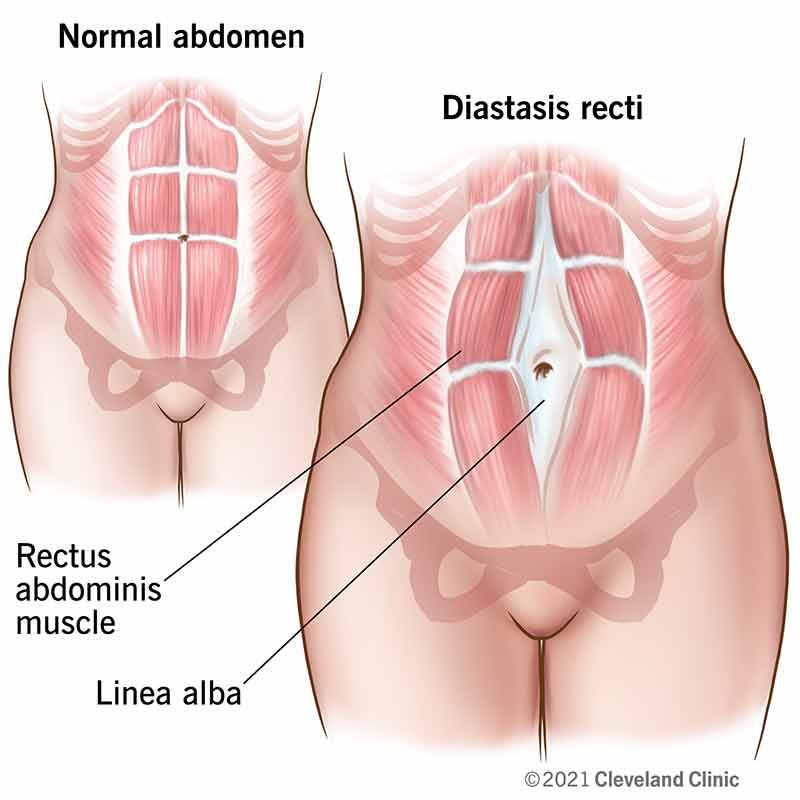
Beyond skin changes, the underlying musculature undergoes significant shifts. One of the most common issues is rectus diastasis, which is the physical separation of the abdominal muscles. According to a medical overview from the Cleveland Clinic, diastasis recti is a condition that affects roughly 6 in 10 women after childbirth. The clinic explains that the connective tissue called the linea alba loses its elasticity after being stretched, leaving a physical gap that often resists traditional workouts.
While clinical physiotherapy and specific core exercises are excellent for strengthening the surrounding abdominal muscles, medical consensus highlights a frustrating reality. Exercise cannot regenerate or shorten the stretched connective tissue once significant structural separation has occurred. When conservative treatments fail to resolve this muscle separation, surgical repair becomes a medically sound option. In cases of severe structural tissue damage, a procedure like an abdominoplasty can physically repair the separated muscles and remove the overstretched tissue.
When Medical Intervention Becomes Necessary
Reconstructive surgery is often framed within the aesthetic industry as part of a post-pregnancy restoration, addressing bodily changes that stubbornly resist lifestyle modifications.
In Australia, the medical necessity of this reconstructive surgery has been officially recognised. As of July 2022, the Australian Government introduced Medicare Benefits Schedule Item 30175, providing a rebate for radical surgical procedures treating postpartum rectus diastasis. The Australian Society of Plastic Surgeons successfully campaigned for this reinstatement, arguing that it is a necessary reconstruction for affected mothers.
To qualify for this Medicare rebate, an Australian patient must meet specific criteria:
- Be at least 12 months postpartum.
- Demonstrate an abdominal muscle separation of 3 centimetres or greater via diagnostic imaging.
- Provide documented proof that non-surgical conservative treatments, such as clinical physiotherapy, have failed to resolve the separation.
- Present documented functional symptoms such as lower back pain, urinary symptoms, or moderate pain at the site of the diastasis.
Focusing on Strength and Function
The conversation around postpartum bodies needs to shift away from unrealistic expectations and move towards functional recovery and genuine self-care. Industry data indicates a long-term upward trend in post-pregnancy procedures, with abdominal and breast surgeries seeing sustained demand among women in the 35 to 50 age demographic. This highlights that seeking help for structural physical changes is both common and completely valid. Women no longer have to suffer in silence or feel guilty for wanting to restore their physical comfort and core stability.
The Australasian Society of Aesthetic Plastic Surgeons actively advises mothers to seek out board-certified specialist plastic surgeons for complex postpartum reconstructions, ensuring safety and tailored surgical plans. If your body has changed in ways that diet and exercise cannot fix, it is not a failure of effort. Sometimes, it is simply a matter of biology requiring a medical solution, and acknowledging that reality is a powerful step toward reclaiming your health and confidence.
Leave a Reply