
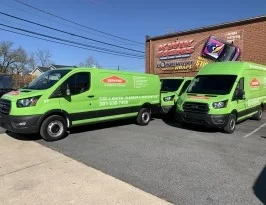
Most business owners think about marketing in terms of websites, social media, and local ads. But there’s a marketing tool already parked in your driveway, and it travels to customers every day. Your work van, pickup, or delivery truck moves through neighborhoods, job sites, and busy roads, which means people are already seeing it. The question is whether it’s saying anything useful about your business.
Treating your vehicles as part of your marketing doesn’t require a big overhaul. It starts with a few simple decisions about what your vehicles should say, who needs to see it, and how it fits with everything else you do.
Why Vehicles Work as a Marketing Channel
Unlike many forms of advertising, a vehicle doesn’t depend on someone searching for you or scrolling at the right moment. It simply shows up where your customers live and work. A plumbing van parked outside a home tells neighbors who the homeowner trusts. A delivery truck stopped at a red light introduces your company to everyone waiting nearby.
That repeated, everyday visibility adds up. Industry research cited by 3M’s fleet graphics resource notes that vehicle advertising can generate roughly 30,000 to 70,000 impressions per day, and that fleet graphics can cost far less per thousand impressions than many other media, including online ads. Results will vary based on where and how often a vehicle travels, but the numbers show why many businesses treat their fleet as more than transportation.
Start With a Clear Message
Before thinking about colors or layouts, decide what a stranger should learn in a few seconds. People usually see a vehicle for a brief moment, so simple wins.
What to Include
- Your company name, large and easy to read
- A short line describing what you do
- One way to reach you, such as a phone number or website
- Brand colors and a logo that people will recognize elsewhere
What to Leave Out
It’s tempting to list every service you offer. In practice, crowded designs are harder to read from a distance. A clean layout with a clear message tends to be remembered longer than a busy one.
Match the Design to the Vehicle
A good design respects the shape of the vehicle it’s on. Windows, door handles, seams, and equipment racks all affect where graphics can go. A layout that looks great on a box truck may not translate directly to a compact van or a pickup door.
A consistent visual identity helps businesses build stronger brand recognition across their vehicles. Custom fleet wraps bring the same logo, colors, and messaging to vans, trucks, and other company vehicles, with each design adapted to the vehicle’s shape and size. This gives the entire fleet a coordinated, professional appearance while making the company easier for customers to recognize wherever its vehicles travel.
RoadRunner Wraps has worked on more than 70,000 vehicles since 1988, and its team handles design, production, and installation. That includes the less obvious details, like how a design should look from behind in traffic versus from the side in a driveway.
Choose the Right Level of Coverage
Not every vehicle needs the same amount of graphics. The right choice depends on your budget, the vehicle’s role, and how much visibility you want.
- Full wraps cover most of the vehicle and give a delivery truck or service van a strong visual presence.
- Partial wraps use the vehicle’s existing paint as part of the design, which can be a practical middle ground.
- Lettering and decals work well when a vehicle mainly needs clear identification.
- Reflective or specialty graphics can add visibility at different times of day, depending on the materials chosen.
Mixing these options across a fleet is common, as long as the colors, logo treatment, and core message stay consistent.
Think Beyond Vans and Trucks
Vehicle marketing isn’t limited to one kind of business. Wraps and graphics are used on cars, SUVs, box trucks, tow trucks, trailers, buses, RVs, and even boats. Food trucks and ice cream trucks often rely on their graphics as their main sign. Trades like HVAC, plumbing, roofing, and construction use them to stand out on job sites and in neighborhoods.
The same thinking can carry indoors. Some businesses extend their look to office walls, interior wall wraps, or window graphics, so the brand feels consistent from the street to the front desk. And if you already have older graphics on a vehicle, removal and replacement can be part of a refresh when your branding changes or you add new vehicles.
Plan the Practical Details
A few simple steps help the process run smoothly:
- List your vehicles. Note makes, models, and how each one is used.
- Gather your branding. Logos, colors, and fonts should be ready, or ask a design team to adapt what you have.
- Check every detail. Phone numbers, website addresses, and service wording should be proofed before anything is produced.
- Plan the timing. Installation needs vehicles to be available, so coordinate schedules, especially for larger fleets.
- Ask for a quote based on your real vehicles. Pricing depends on coverage, design, and quantity, so a tailored estimate is more useful than a general range.
Keep It Working Over Time
Vehicle marketing is easiest to maintain when you treat it like any other part of your brand. Keep graphics clean, and replace anything that’s damaged or outdated. When you add new vehicles, bring them into the same visual system. Make sure your website and social profiles use the same colors and wording, so a customer who sees your van and then looks you up finds a familiar match.
Final Thoughts
Your vehicles are already out in your community every day. With a clear message, a design suited to each vehicle, and a bit of planning, they can support the rest of your marketing in a steady, practical way. You don’t need to do everything at once. Start with one vehicle or one simple message, see how customers respond, and build from there.
Leave a Reply