
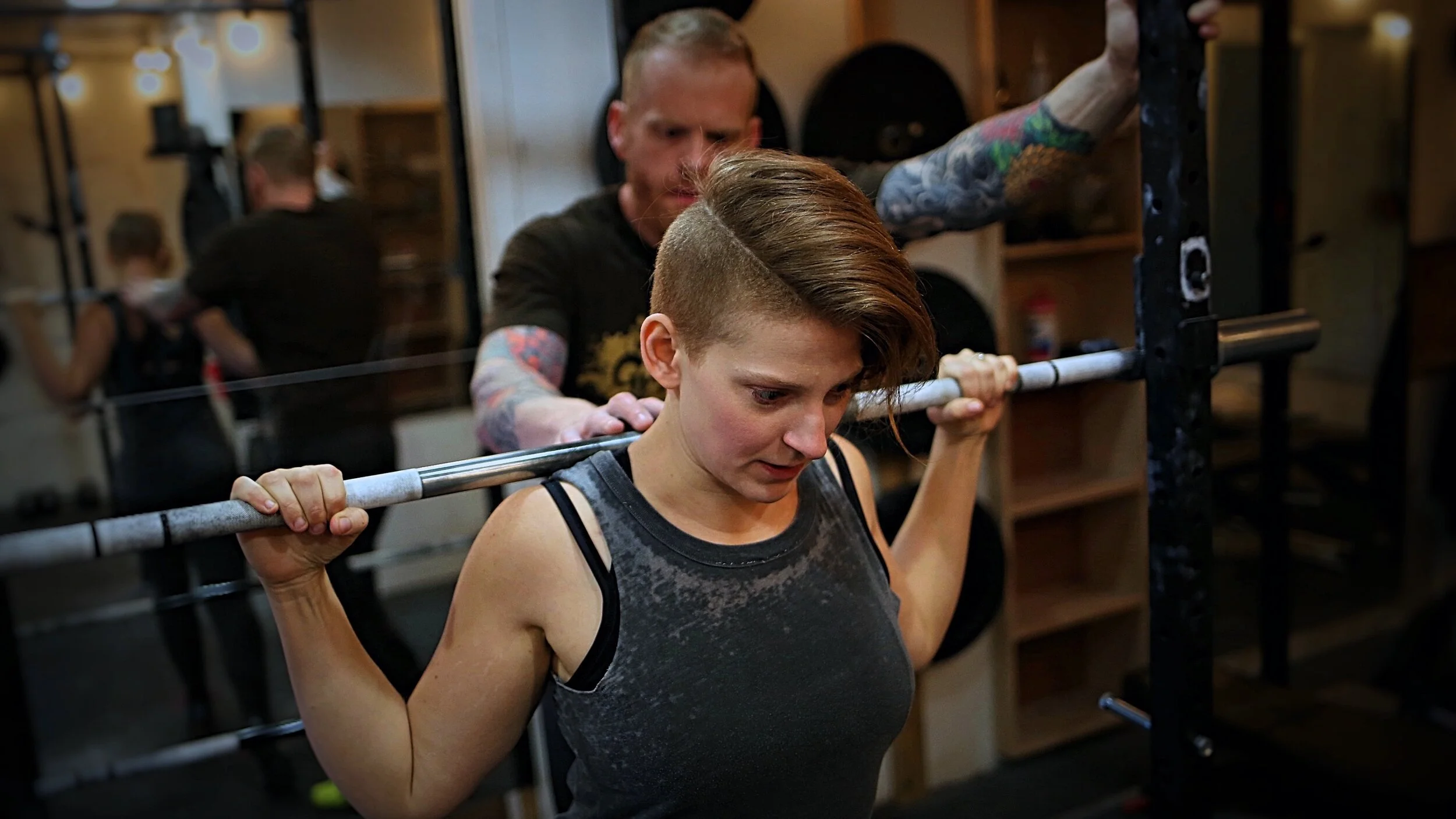
A private gym in Silver Lake can make strength training feel less like fighting for equipment in a crowded room and more like following a program that was actually built around your body, schedule, and goals.
That difference matters when someone wants more than a place to lift weights and is looking for coaching, thoughtful progression, and an environment where the trainer can pay attention to how every repetition is performed.
For people who value focused coaching and a quieter training environment, choosing a private gym in Silver Lake can provide a more individualized alternative to the conventional big-box gym experience.
At the same time, movement systems such as Gyrotonic training offer another way to approach strength, mobility, coordination, and body awareness, showing how personalized fitness can take very different forms.
Why Personalized Strength Training Feels Different
Walk into a typical commercial gym at 6 p.m., and the first challenge may have nothing to do with your workout.
The squat racks are occupied, someone is waiting for the cable machine, and the dumbbells you need have somehow migrated to the other side of the room.
A private training environment changes that dynamic because the session can revolve around the person rather than the availability of equipment.
Instead of arriving with a generic list such as “three sets of squats, lunges, and leg presses,” a client can work through movements selected according to current strength, mobility, training history, and specific objectives.
Someone who spends eight hours a day sitting at a desk, for example, may need a very different lower-body program from a recreational runner preparing for a half marathon.
Both may want stronger legs, but the exercises, volume, movement preparation, and recovery demands can differ considerably, just as someone exploring gyrotonic classes palo alto may need a movement approach tailored to their individual mobility and strength needs.
Coaching Goes Beyond Counting Repetitions
Personal training is most useful when the coach is doing more than standing nearby and counting to ten.
Good coaching involves watching how a person moves and making small adjustments before poor technique becomes a repeated habit.
Consider a client performing a Romanian deadlift.
The movement may look straightforward, but details such as spinal position, hip movement, foot pressure, range of motion, and load selection can completely change how the exercise feels.
A coach may notice that the client is bending primarily through the lower back instead of hinging through the hips and adjust the movement immediately.
That kind of real-time feedback is difficult to replicate when someone is following a workout from a phone while training alone.
Privacy Can Improve the Quality of a Workout
Privacy is not simply about avoiding other people.
It can create an environment where someone feels comfortable slowing down, asking questions, practicing unfamiliar movements, and concentrating on technique without worrying about who is waiting for the equipment.
Imagine someone learning barbell squats for the first time.
In a packed gym, that person might rush through the setup because three people are standing nearby waiting for the rack.
In a more controlled setting, there is room to adjust foot position, practice with a lighter load, review technique, and gradually increase resistance when the movement is ready.
That can make the entire training process feel more deliberate.
The Workout Can Adapt in Real Time
A personalized program should not behave like a rigid spreadsheet.
People arrive at training sessions with different energy levels, sleep quality, soreness, stress, and recovery from one week to the next.
Suppose someone is scheduled for heavy lower-body training on Tuesday but arrives after a poor night of sleep with unusually tight hips.
A trainer might reduce the load, adjust the exercise selection, extend the warm-up, or move the heavier work to another session.
The objective is not to make every workout easier.
It is to make each workout appropriate enough that progress can continue without treating the body like a machine that performs identically every day.
Strength Training Is More Than Lifting Heavier Weights
Progress is often measured by numbers on a barbell, but strength has a broader meaning.
Control, stability, coordination, mobility, muscular endurance, and confidence under resistance all contribute to how well someone moves.
A person may technically be capable of lifting a heavier weight while still lacking control through part of the movement.
Adding more plates in that situation is not necessarily the most useful next step.
Sometimes progress means performing the same exercise with better range of motion, cleaner technique, or greater stability.
This is where individualized programming becomes valuable because progression can be measured according to what the person actually needs rather than one universal definition of improvement.
Where Gyrotonic Training Fits Into the Picture
Gyrotonic training takes a different approach from conventional resistance training.
Rather than focusing primarily on linear movements and external loads, sessions commonly incorporate flowing, circular, and multidirectional movement patterns using specialized equipment and guided resistance.
People exploring Gyrotonic classes Palo Alto may encounter exercises designed around coordinated movement of the spine, shoulders, hips, and limbs rather than isolated muscle groups.
That does not mean traditional strength exercises and Gyrotonic work need to compete with each other.
They can represent different tools for different training priorities.
Someone might use resistance training to develop stronger legs and pulling strength while using movement-focused sessions to work on coordination, spinal mobility, and controlled ranges of motion.
Different Bodies Need Different Entry Points
The idea of a “beginner workout” can be misleading because beginners are not all starting from the same place.
A 28-year-old who played sports throughout college but stopped training for three years has a different starting point from a 55-year-old who has never followed a structured resistance program.
Their exercise selection should reflect those differences.
The first person might quickly regain familiarity with loaded squats and presses, while the second may benefit from spending more time learning fundamental movement patterns before increasing resistance.
Personalized coaching makes room for those distinctions instead of forcing everyone through the same template.
Consistency Becomes Easier When the Program Makes Sense
One reason people abandon fitness routines is that their workouts feel disconnected from their actual goals.
If someone wants to feel stronger during everyday activities, a random collection of machines may eventually become difficult to stay excited about.
A structured program provides context.
The client understands why a particular exercise is included, what is supposed to improve, and how today’s session connects with the work completed two weeks earlier.
That creates a sense of progression that goes beyond sweating for an hour.
It also makes plateaus easier to investigate because the trainer can look at training volume, exercise selection, recovery, technique, and consistency rather than simply telling the client to work harder.
Personal Training Should Still Build Independence
Individual coaching does not have to make someone permanently dependent on a trainer.
Ideally, the opposite happens.
Over time, clients can learn how to set up exercises, recognize appropriate effort, understand basic programming, and identify the difference between productive muscular fatigue and a movement that simply does not feel right.
For example, someone who once needed constant guidance during a goblet squat may eventually understand stance, bracing, depth, and load selection well enough to perform the movement confidently.
The trainer’s role can then evolve from teaching every basic detail to refining technique and planning more advanced progression.
That learning process gives training value outside the coached session itself.
A More Personal Definition of Progress
Fitness goals are rarely as simple as “get stronger.”
One person may want to perform their first pull-up, another may want stronger legs for hiking, and someone else may simply want to move through daily life without feeling stiff after sitting at a computer.
Personalized strength training starts by defining what progress means for that particular person.
The training plan can then be built backward from that objective.
For a first pull-up, that might involve assisted pull-ups, rows, grip work, and progressive pulling volume.
For hiking, the emphasis could shift toward single-leg strength, step-ups, loaded carries, calf work, and cardiovascular conditioning.
The exercises have a reason to be there.
Making Strength Training Fit the Individual
The most useful fitness program is not necessarily the one with the most complicated exercises, newest equipment, or hardest sessions.
It is the one that matches the person’s goals closely enough to be performed consistently and progressed intelligently.
Private coaching can create the space for that kind of attention, while approaches such as Gyrotonic training can add another dimension by emphasizing coordinated, controlled movement.
Both reflect the same broader idea: effective training should adapt to the person rather than expecting the person to adapt blindly to a generic workout.
When exercise selection, coaching, progression, and recovery are treated as individual variables, strength training becomes less about simply completing workouts and more about building a body that performs better in the situations that actually matter.
Leave a Reply