
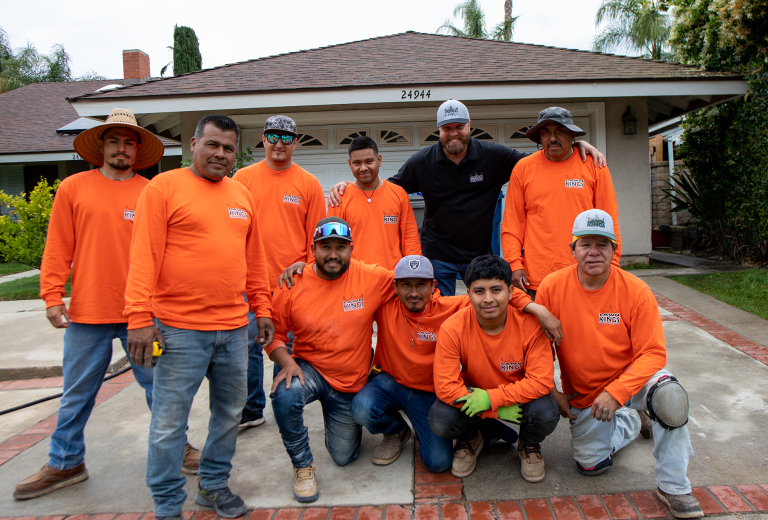
Burbank turf experts help busy families remove one surprisingly time-consuming responsibility from their weekly routine: keeping a lawn green, clean, and usable throughout the year.
For households already balancing work schedules, school pickups, appointments, vacations, and unexpected absences, reducing routine maintenance can make everyday life noticeably easier.
Homeowners considering a lower-maintenance yard can work with Burbank turf experts to understand how artificial grass could fit their property, lifestyle, and outdoor space.
The same principle applies inside the workplace, where employee leave management software reduces the administrative work involved in requesting, approving, documenting, and tracking time away.
These solutions may seem unrelated, but both address the same modern problem: people spend too much time managing recurring tasks that can often be simplified.
Why Busy Families Are Looking for Ways to Reduce Routine Work
A typical weekday can become complicated before breakfast is finished.
One parent may have an early meeting, another may need to take a child to school, and someone still has to handle groceries, dinner, appointments, household maintenance, and dozens of smaller responsibilities.
Then Saturday arrives, and the tasks that did not fit into the workweek start competing for attention.
Traditional lawn care can easily become one of those jobs.
Grass needs mowing, watering, edging, fertilizing, weed control, and occasional repairs when dry patches or heavy foot traffic damage the lawn.
In Southern California, homeowners also have to think carefully about irrigation and water use, particularly during hot and dry periods.
Artificial turf changes that maintenance equation by eliminating many of the recurring jobs associated with natural grass.
That does not mean a synthetic lawn requires zero attention, but routine upkeep can involve simpler tasks such as removing leaves, rinsing dusty areas, brushing fibers, and cleaning spots used frequently by pets, much like employee leave management software simplifies recurring administrative tasks for busy workplaces.
Turning Saturday Morning Back Into Family Time
Consider a family with two working parents and two school-age children.
Their natural lawn needs mowing every week or two, sprinklers occasionally require adjustments, weeds appear around the edges, and summer heat can leave sections looking uneven.
Individually, none of those jobs sounds overwhelming.
Combined over months and years, however, they represent a meaningful amount of time and attention.
A properly planned artificial grass installation can shift the backyard from an ongoing landscaping project into a more predictable outdoor space.
Instead of deciding whether Saturday morning should be spent mowing or repairing a sprinkler head, the family can use the yard for breakfast outside, games with the kids, or simply doing nothing.
That last option is often underrated.
Artificial Grass Is About More Than Avoiding the Lawn Mower
Reducing mowing is an obvious advantage, but homeowners usually have several practical considerations when evaluating synthetic grass.
Drainage, surface preparation, turf density, blade shape, infill, seams, edging, and installation quality can all affect how the finished lawn performs.
A backyard used by children, for example, may have different priorities from a narrow decorative side yard.
Pet owners may care more about drainage and cleaning, while someone designing an entertainment area may prioritize appearance and how the turf transitions into paving, decking, or a patio.
This is where professional turf installation becomes important.
The goal is not simply to cover dirt with artificial grass.
The underlying surface has to be prepared correctly so the finished area remains stable, drains effectively, and looks natural around edges and obstacles.
Small Installation Details Can Have a Big Impact
Imagine a homeowner replacing a patchy 600-square-foot backyard lawn.
The yard contains a mature tree, a concrete patio, and a side gate that receives frequent foot traffic.
A thoughtful installation needs to account for each of those conditions rather than treating the entire space as a flat rectangle.
The area near the gate may experience heavier wear, while transitions around the patio require clean cuts and secure edges.
Drainage becomes especially important if water naturally collects in one section of the yard.
Those details are easy to overlook when homeowners focus only on the appearance of turf samples.
The Workplace Version of the Same Problem
Families do not stop managing schedules when they arrive at work.
Employees request vacations, take sick days, attend medical appointments, care for relatives, and sometimes need extended periods away from work.
When organizations rely on spreadsheets, scattered emails, calendar notes, and manual approvals, managing those absences can become unnecessarily complicated.
Employee leave management software centralizes much of that information.
Depending on the system, employees may be able to submit leave requests, check available balances, upload required information, and follow approval status without repeatedly emailing HR.
Managers can see upcoming absences and plan staffing accordingly, while HR teams have a clearer record of requests and approvals.
The practical benefit is similar to choosing a lower-maintenance yard: fewer repetitive administrative tasks competing for attention.
Less Administration Can Create More Predictable Days
Suppose an employee wants to take three days off during a school break.
In a manual workplace, that request might begin with an email to a manager, followed by a message to HR, a spreadsheet update, a calendar entry, and another conversation about remaining leave.
If information is missing somewhere along the way, the employee may need to follow up several times.
A centralized leave management system can make the process more structured.
The employee submits the request through one system, the appropriate manager reviews it, and the record remains accessible to the people responsible for scheduling and administration.
That does not eliminate every conversation, nor should it.
It simply reduces the need for people to spend time chasing basic information.
Better Visibility Helps at Home Too
Workplace scheduling has a direct effect on family scheduling.
When employees can clearly see whether leave has been approved, they can make plans with greater confidence.
Flights can be booked, childcare arrangements can be confirmed, and appointments can be scheduled without relying on an unresolved email chain.
Managers benefit from visibility as well because they can identify overlapping requests before a staffing problem develops.
For a working parent, that predictability matters.
A simple vacation request should not become another project that needs to be managed after dinner.
Simplification Works Best When It Removes Repetitive Decisions
Modern families often look for productivity hacks, but sometimes the most useful improvement is simply removing a recurring decision.
A low-maintenance landscape means fewer questions about when to mow, how long to run sprinklers, or whether a brown patch needs attention.
Digital leave management means fewer questions about where a request was submitted, who approved it, or how much time off remains.
Neither solution creates additional hours in a day.
Instead, each reduces the number of small tasks demanding those hours.
That distinction matters because administrative overload is rarely caused by one enormous responsibility.
More often, it comes from dozens of small obligations that repeatedly interrupt work and personal time.
Choosing Solutions Around Real Life
Artificial turf should be selected according to how an outdoor area will actually be used.
A household with a dog, three children, and frequent backyard gatherings needs something different from a homeowner who mainly wants a neat front lawn.
The same logic applies to leave management technology.
A small business with 15 employees may not need the same workflows as an organization managing hundreds of workers across multiple locations, departments, or shifts.
The useful question in both cases is not simply, “What has the most features?”
It is, “What removes the problems we repeatedly deal with?”
That approach keeps homeowners from paying for unnecessary landscaping features and helps employers avoid adopting overly complicated software that employees struggle to use.
Maintenance Does Not Disappear, but It Becomes More Manageable
No practical solution eliminates responsibility completely.
Synthetic turf still benefits from occasional cleaning, debris removal, brushing, and attention to high-traffic or pet areas.
Leave management systems still require accurate policies, responsible approvals, updated employee information, and appropriate oversight.
The difference is that maintenance becomes more structured and predictable.
Instead of constantly reacting to the same recurring problems, families and businesses can establish simpler routines.
That predictability can be particularly valuable during already busy periods such as summer vacations, school holidays, major work projects, or family events.
Spending Less Time Managing the Background of Life
The connection between landscaping and workplace software becomes clearer when viewed through the lens of time.
A yard should be somewhere a family can relax, play, entertain, or enjoy the outdoors rather than another source of endless weekend chores.
Likewise, requesting time away from work should be a straightforward administrative process rather than a chain of emails that employees and managers have to repeatedly revisit.
Artificial grass installation and employee leave management software solve very different practical problems, but both can reduce recurring friction.
For busy families, that can mean fewer hours spent maintaining systems and more time actually using the home, taking the vacation, attending the school event, or enjoying a free Saturday.
The objective is not to automate every part of life.
It is to simplify the repetitive work in the background so people have more time and attention for the parts that matter.
Leave a Reply