
Your driveway works harder than anything else outside your house. It takes the school run, the dog’s muddy paws, the bikes, the scooters, and whatever your kids dragged home from the park. And unlike your kitchen floor, nobody wipes it down after dinner.
So when the pavers start looking tired, that’s not a sign you did anything wrong. A family driveway is basically a high-traffic zone that never gets a day off. The good news is that keeping pavers looking new doesn’t require a landscaper on retainer. It’s a routine, and once you’ve got it down, it takes less time than you’d think. If you’re in Northeast Florida and don’t want to spend a Saturday on the heavy part, a crew that does Pressure washing St. Johns can strip the grime and re-sand and seal the joints while they’re at it.
Why Family Driveways Age Faster Than You Expect
Pavers aren’t fragile. They’re built to handle weight and weather. But the joints between them are the weak spot, and that’s where things go sideways. Sand works its way out over time, weeds find the gaps, and moisture settles in where it shouldn’t. Add a household of kids tracking in dirt and a car parked on the same spot every day, and you’ve got a surface that wears unevenly.
Here’s the thing most homeowners miss: the pavers themselves usually hold up fine. It’s everything happening in the seams that causes trouble. A single summer of heavy use can loosen joints you spent good money on. Municipal guidance on permeable and pervious paver systems makes the same point, that joint material and drainage carry just as much weight as the stone on top. If you’re curious how that works, the Reading, MA guide breaks it down in plain terms.
The Weekly Habit That Does Most of the Work
You don’t need to make this complicated. A five-minute sweep once a week, ideally on a dry day, keeps grit and leaves from settling into the joints. Do it before you water the garden, not after. Wet debris clumps and gets pushed deeper.
Once a month, hose the driveway down and look for anything that’s changed. A new weed sprouting between pavers is a sign the joint sand is thinning. A dark patch that doesn’t dry is a sign water is pooling somewhere it shouldn’t. Catching either of those early saves you a bigger job later.
What Actually Restores the Color
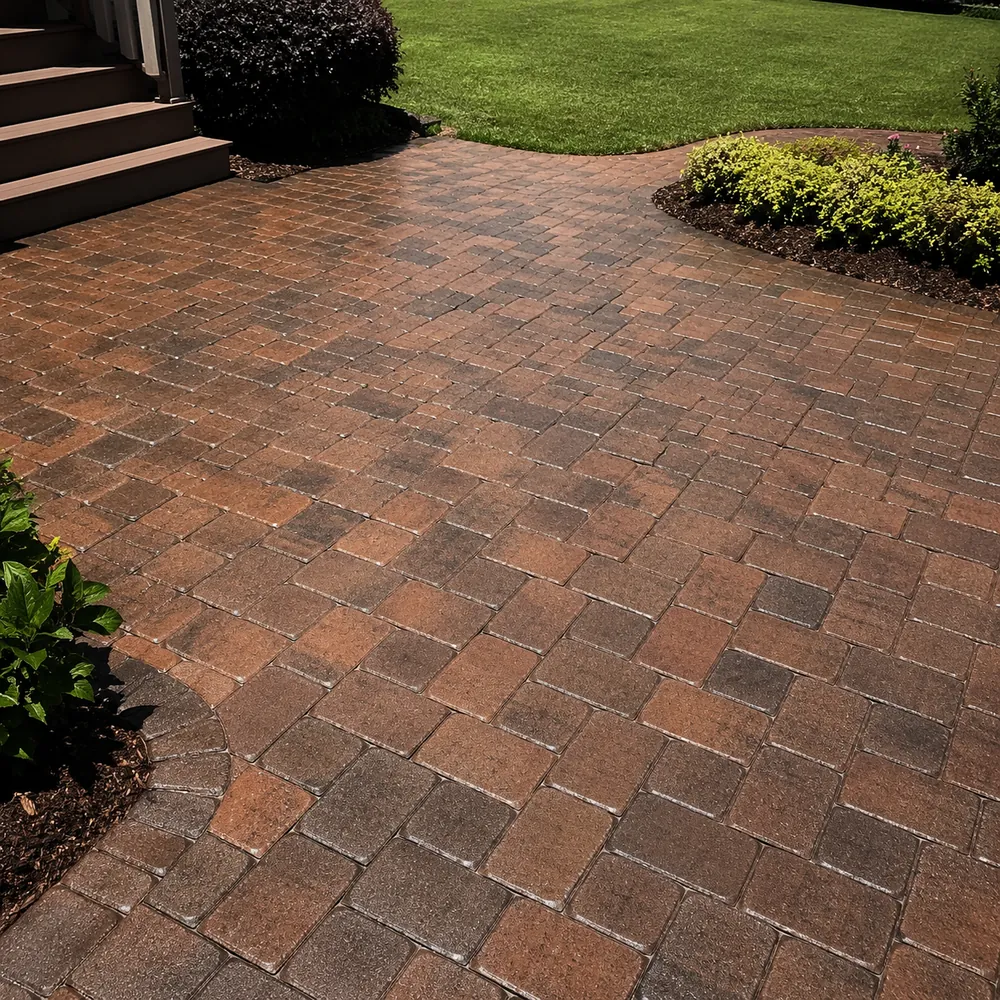
When pavers go gray and flat, it’s usually not the color fading. It’s a film of dirt, pollen, and mildew sitting on top. A good clean strips that film off and the original tone comes back. I’ve seen driveways that looked ready for replacement come back to life after a single proper wash.
A sealer is what holds that fresh look in place. It locks the joint sand down, which means fewer weeds and less ant activity. It also gives spills something to sit on instead of soaking into the stone, so a dropped juice box is a wipe-up job, not a permanent stain. Local stormwater guidance on pervious paver systems reinforces why joint integrity matters for how the whole surface performs over time.
A Simple Maintenance Calendar You’ll Actually Follow
- Weekly: Sweep the driveway. Clear leaves and grit before they work into the joints.
- Monthly: Hose it down and take a look. Check for weeds, dark patches, or loose sand.
- Seasonally: Spot-clean oil drips and heavy stains before they set.
- Yearly: Book a professional clean and reseal to reset the joints and bring back the color.
That last one is the piece most families skip, and it’s the one that buys you the most time. Treat it like an annual appointment, the same way you’d book a dentist visit, and the driveway stays in front of the wear rather than you playing catch-up with it.
The Mistakes That Cost You the Look
Two things wreck pavers faster than traffic. The first is a pressure washer cranked too high, which can pit the surface and blast out joint sand in seconds. The second is ignoring weeds until they’ve rooted deep enough to lift a paver. Yank them while they’re tiny. It’s a two-minute job then and a weekend project later.
Also, resist the urge to seal a driveway that hasn’t been properly cleaned first. Sealing over dirt traps it in, and you’ll be looking at a cloudy finish you can’t undo easily. Clean it, re-sand the joints, then seal. Same sequence every single time.
Worth the Effort
A busy family driveway is going to take a beating. That’s just life with kids and cars and dogs. But a little routine keeps it looking sharp, and an annual clean and seal does the heavy lifting so you don’t have to think about it the rest of the year. Start with the weekly sweep this week and see how much difference it makes.
Leave a Reply