
A few years ago, working from the kitchen table or a cramped corner of the living room was a temporary novelty. You balanced your laptop on a stack of books, took Zoom calls with a messy kitchen in the background, and assumed you would be back in a traditional cubicle within a few weeks.
Today, the workplace landscape has permanently shifted. Hybrid work—splitting time between a corporate office and your house—is the new standard for millions of professionals.
However, there is a massive difference between surviving a few remote days on the sofa and thriving in a sustainable, long-term hybrid work environment. If your house lacks boundaries, quiet zones, and proper tech infrastructure, your productivity and mental health will eventually suffer.
So, how do you evaluate your current living space? Here is a comprehensive guide to determining if your home is truly ready for the demands of modern hybrid work.
What Makes a Home Truly Ready for Hybrid Work?
A home is ready for hybrid work when it provides a dedicated, distraction-free workspace, reliable high-speed internet infrastructure, adequate acoustic privacy, and an ergonomic setup that physically separates professional obligations from personal relaxation areas.
When a living space successfully blends these elements, it allows you to “clock in” with intense focus and “clock out” without work bleeding into your family time.
1. A Dedicated, Boundary-Driven Workspace
The biggest challenge of hybrid work is not the workload itself; it is the psychological blurring of work and life. When you work, eat, and sleep in the exact same room, your brain never fully disconnects from office stress.
A hybrid-ready home requires distinct physical boundaries. Ideally, this means a separate room with a door that closes. If a spare bedroom isn’t available, you must create a dedicated “work zone” using visual dividers like bookshelves, folding screens, or even a distinct rug.
When you sit in this specific zone, you are at work. When you step away, you are home. If you are constantly clearing away dinner plates to make room for your keyboard, your home is not currently optimized for a hybrid schedule.
2. Robust Technological Infrastructure
Corporate offices are wired to handle massive data loads without a hiccup. Your home network now has to replicate that reliability.
Before committing to a long-term hybrid role, audit your home’s technical capabilities:
- Bandwidth: Standard internet packages often struggle when one person is on a video conference, another is streaming a 4K movie, and smart home devices are running in the background. Upgrade to a fiber-optic or gigabit connection if available.
- Router Placement: Wi-Fi signals degrade through walls and floors. If your office is in a basement or upstairs corner, you may need a mesh Wi-Fi network to eliminate dead zones.
- Power Accessibility: A true hybrid setup requires multiple monitors, a laptop dock, dedicated lighting, and charging stations. If you are relying on a single, overloaded extension cord stretched across a hallway, you need to rethink your room layout or have an electrician add dedicated outlets.
3. Acoustic Privacy and Noise Control
Nothing derails a professional presentation faster than a barking dog, a blaring television, or the sound of a lawnmower right outside your window.
In a hybrid-ready home, controlling sound is just as important as controlling clutter. If your current workspace echoes or lets in every conversation from the kitchen, consider simple acoustic soundproofing for home offices:
- Install a solid-core door rather than a hollow one to block ambient house noise.
- Add soft furnishings like thick rugs, heavy curtains, and canvas wall art to absorb sound reflections.
- Apply weatherstripping around your office door frame to seal noise gaps.
4. Ergonomics and Natural Lighting
Working from a soft couch or a rigid dining chair for eight hours a day will inevitably lead to chronic back pain and terrible posture. A sustainable ergonomic home workspace setup requires a highly adjustable chair, a desk set at the correct typing height, and monitors positioned at eye level to prevent neck strain.
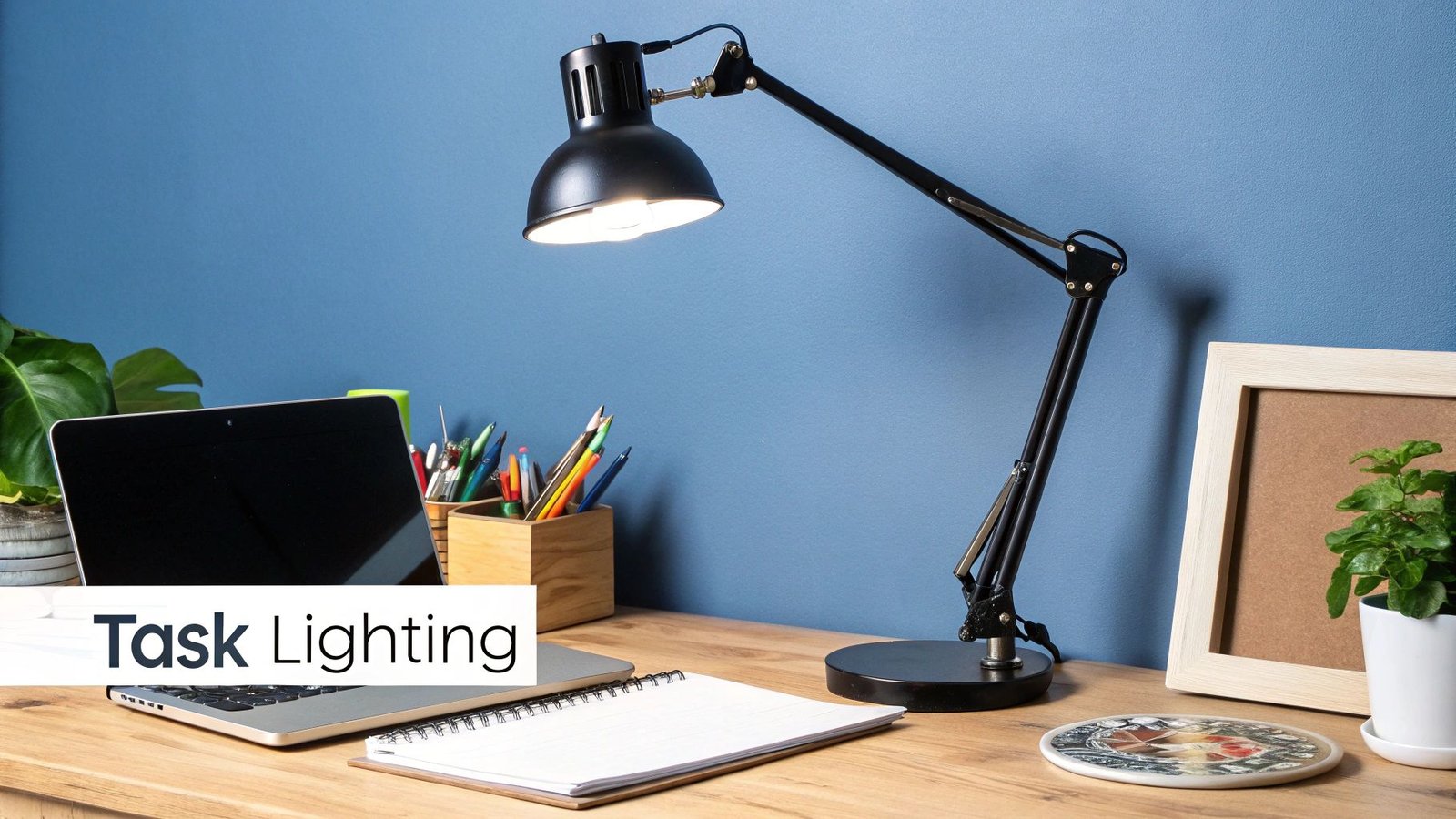
Equally important is your lighting setup. Dark, windowless rooms drain your energy and make you look shadowy on video calls. A hybrid-ready space utilizes abundant natural light. Position your desk facing a window so the natural light illuminates your face evenly. If natural light is limited, apply strategic home office lighting tips by placing a soft LED ring light behind your monitor and a warm floor lamp in the corner to avoid harsh overhead shadows.
Renovation vs. Relocation: When Is It Time to Move?
Sometimes, no amount of rearranging or upgrading can make a home suitable for two adults working remotely. If your family is growing and you are taking conference calls from a walk-in closet, it may be time to evaluate whether your current house still fits your lifestyle.
Many modern homebuyers now prioritize floor plans with double offices, finished basements, or detached accessory dwelling units (ADUs) in the backyard.
If you realize your current property cannot support your career needs, finding a layout designed for the future of work is a smart investment. Partnering with a specialized professional, such as a real estate buyer agent in Spanish Fork UT, can help you navigate local markets to find properties that already feature dedicated office spaces, gigabit internet availability, and quiet neighborhood environments suited for daytime focus.
Common Hybrid Workspace Mistakes to Avoid
Even if you have the space, avoid these frequent setup traps:
- The Bedroom Office: Your brain associates your bedroom with sleep. Putting a desk feet away from your mattress increases anxiety and causes insomnia. Keep work out of the bedroom whenever possible.
- Ignoring Background Aesthetics: You do not need a viral, Pinterest-perfect office, but a cluttered background during video calls sends an unprofessional message to clients and managers. Keep the space behind your chair clean and minimal.
- Sitting Too Long: At a corporate office, you naturally walk to meetings, the breakroom, or a colleague’s desk. At home, you might only walk a few steps all day. Invest in a standing desk and force yourself to take brief movement breaks every hour.
Frequently Asked Questions
Can I deduct my home office on my taxes if I work a hybrid schedule?
If you are a traditional W-2 employee, current IRS rules generally do not allow you to deduct home office expenses, even if you work hybrid. However, if you are an independent contractor or run a side business from that office, you may qualify for specific square-footage deductions. Always consult a licensed CPA for your specific situation.
What is the minimum internet speed required for hybrid work?
For seamless HD video conferencing and fast file sharing, aim for a minimum of 100 Mbps download and 20 Mbps upload speeds per remote worker in the household.
Conclusion
Hybrid work offers incredible flexibility, saving you hundreds of hours in commuting time and giving you greater control over your daily routine. However, to truly reap these benefits, your home must transition from a place of pure rest into a dual-purpose environment. By establishing strict physical boundaries, upgrading your tech infrastructure, optimizing for acoustics, and investing in your physical comfort, you can build a workspace that fuels your career progress without sacrificing the comfort of home.
Leave a Reply