
Image Credit: Unsplash
A charcuterie board can support far more interesting drink pairings than the familiar bottle of red or white wine. Salty cured meats, creamy cheeses, fresh fruit, honey and crisp crackers create plenty of opportunities to experiment with flavor. The key is to think about what each drink contributes, from acidity and sweetness to bubbles and herbal notes.
This flexible approach also makes the board easier to serve at gatherings. Guests can explore several small pairings while nonalcoholic choices keep the spread welcoming and inclusive.
Moving Beyond the Standard Grape
Charcuterie boards have grown popular because they’re flexible, attractive and easy to adapt for different group sizes. A summer guide to charcuterie kits also highlights how combinations of salami, artisan cheese and wine jelly can create an enjoyable spread for gatherings. A look at the rise of charcuterie boards shows how this once-specialized serving style became a familiar choice for parties and casual evenings at home. Yet drink pairings often remain predictable.
Start by identifying the board’s strongest flavors. A spread built around smoked meat and sharp cheddar needs a different companion than one featuring soft cheese, pears and mild nuts. Acidity helps refresh your palate after rich food, while sweetness can soften salty or spicy ingredients. Carbonation also works well because it clears away creamy textures between bites.
Sparkling apple cider is an easy place to begin. Its fruit character suits cheddar, gouda and pork-based charcuterie and alcohol-free versions let more guests participate. Unsweetened iced tea can handle savory boards too. Try black tea with aged cheese or jasmine tea with creamy cheese and fresh grapes.
For a larger gathering, offer two contrasting drinks instead of trying to find one universal pairing. Set out a tart, sparkling option beside something rounder and lightly sweet. Small glasses encourage tasting and keep the focus on the food. Label each drink so guests know what they’re sampling, especially when alcoholic and nonalcoholic choices look similar.
Artisan Sips That Balance Savory Bites
Artisan drinks bring distinctive ingredients to the table. Mead, botanical sodas, small-batch cider and fermented tea can echo flavors already present on a charcuterie board. They also give guests a simple way to compare how one bite changes when it meets a sweet, tart or herbal sip.
Honey-based mead is especially useful with salty and savory foods. A traditional style may complement aged cheddar, roasted nuts and cured meat, while fruit-infused varieties can work with berries or soft cheese. If you want to explore styles before planning the board, you can buy mead online and review the producer’s flavor descriptions. Choose one bottle that connects to two or three ingredients instead of matching every item separately.
Keep serving sizes modest and provide water throughout the meal. Mead styles vary in sweetness and alcohol content, so check the label and serve the drink responsibly. A chilled bottle may feel brighter beside rich cheese, while a less-cold serving can reveal more honey and spice notes.
Nonalcoholic artisan drinks deserve equal care. Ginger beer cuts through creamy cheese, though a milder version is better for guests sensitive to heat. A tart kombucha can pair with salami and pickled vegetables, while rosemary lemonade fits goat cheese and citrus-marinated olives. These alternatives support the same principle behind great gathering boards: guests enjoy having a range of flavors they can combine at their own pace.
Balancing Sweet Honey and Aged Cheeses
Honey and aged cheese form a natural pairing because sweetness softens salt and highlights the nutty flavors that develop during aging. The combination still needs restraint. Too much honey can cover the cheese’s character and make every bite taste the same.
Pour honey into a small dish or drizzle a narrow ribbon over one section of the board. Keep it close to cheeses that benefit most, such as aged gouda, Parmesan or sharp cheddar. Blue cheese can also work, especially with a floral honey, but its bold flavor may overwhelm delicate drinks. Give each cheese enough space so guests can taste it alone before adding honey.
Texture matters here. Pair hard cheese with crisp apple slices or thin crackers, then add a small drop of honey. For soft cheese, use toasted bread and a less runny honey that won’t soak through immediately. Walnuts, almonds and dried apricots create useful bridges between the sweet condiment and the savory elements.
Good flavor balance and presentation also depend on contrast. If the board includes honey, jam and dried fruit, add briny olives or tart pickles to prevent the spread from becoming overly sweet. A dry sparkling drink can refresh the palate, while an herbal tea brings warmth without adding more sugar.
Taste the pairing before guests arrive. One cracker, a small piece of cheese and half a teaspoon of honey will tell you if the proportions work.
Designing a Feast for the Senses
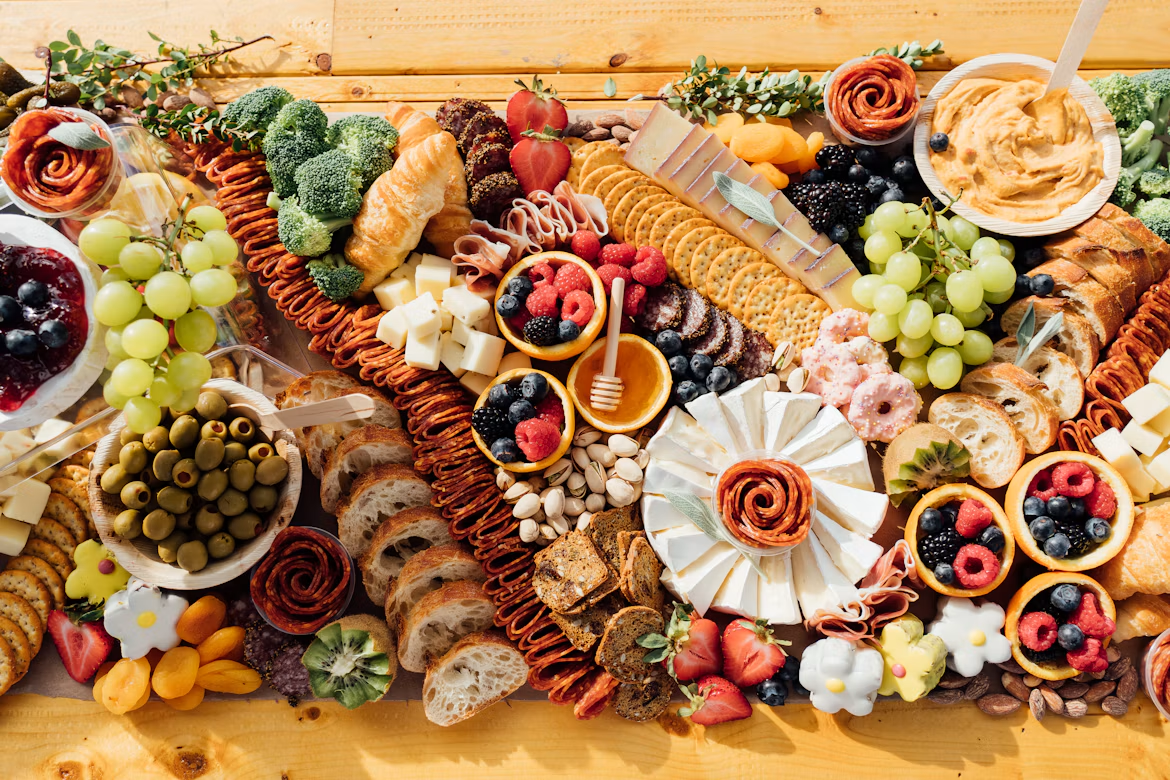
A successful charcuterie board should be easy to understand at a glance. Guests need to see where to begin, which utensils to use and which foods belong together. Place the largest items first, including cheese wedges, small bowls and folded slices of charcuterie. Fill the remaining spaces with crackers, fruit, nuts and vegetables.
Color helps each ingredient stand out. Pale cheeses look more appealing beside dark grapes, berries or green herbs. Pickled vegetables add brightness as well as acidity. The practical appeal is part of why charcuterie boards work: people can build bites that suit their own preferences without waiting for a plated course.
Use separate serving tools for honey, soft cheese and pickled items. This keeps crackers crisp and helps guests avoid unexpected flavor mixing. If anyone has a food allergy, use clearly marked dishes and keep those foods physically separated. Remember that moving an ingredient a few inches away doesn’t prevent cross-contact, so a separate board may be the safer choice.
Temperature affects the experience too. Take most cheeses out of the refrigerator about 30 minutes before serving, following package guidance and basic food-safety limits. Keep perishable meats chilled until close to serving time and replenish the board in small batches during a long gathering.
Arrange drinks beside brief pairing suggestions. A simple card might recommend sparkling cider with cheddar, iced tea with gouda and mead with roasted nuts. These prompts offer direction without turning the table into a formal tasting.
Leave some open space on the board instead of packing every gap. Guests will have room to cut cheese and lift crackers without disturbing the entire arrangement. That small detail makes the first serving as enjoyable as the last, especially once everyone starts testing honey, cheese and drink combinations of their own.
Leave a Reply