
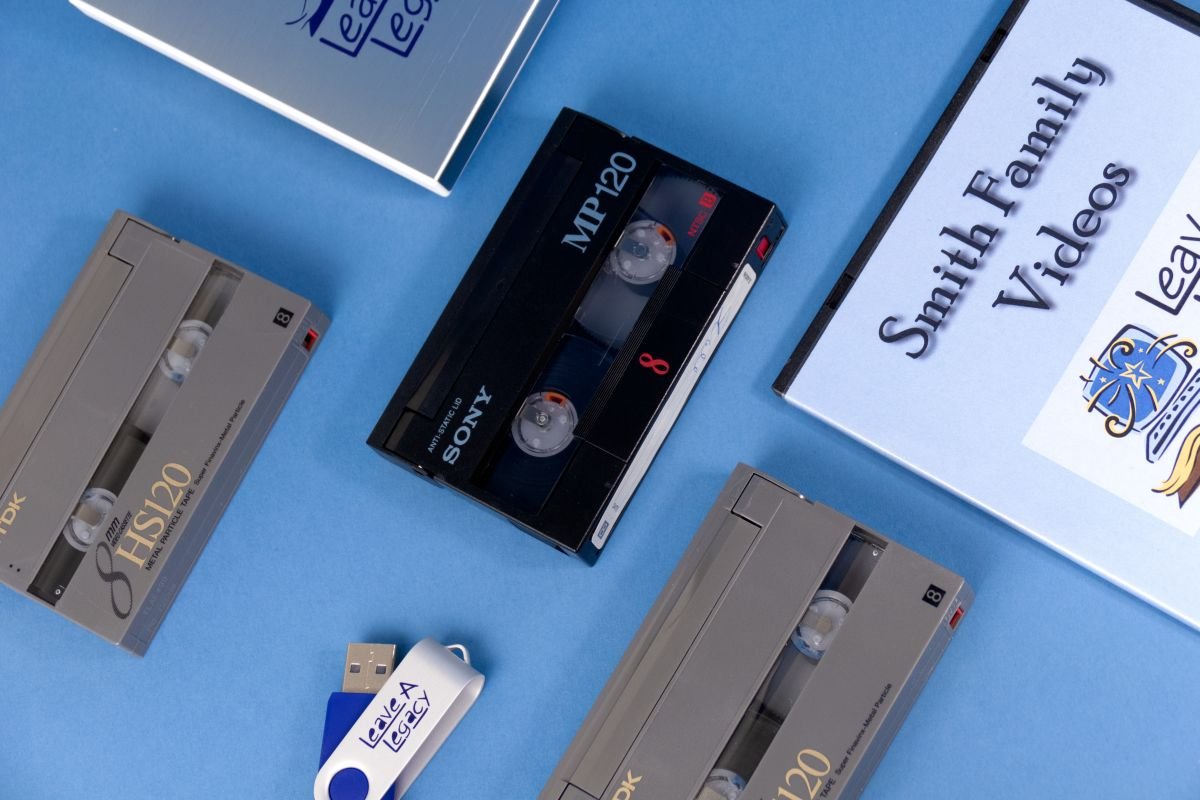
Picture digging through a closet looking for holiday decorations and instead finding a shoebox of old camcorder tapes, the ones labeled in your mom’s handwriting: “Baby’s First Steps,” “Christmas ’98,” and “Sarah’s Birthday Party.” You pop one into a player that barely still exists anymore, and there you are, three years old, laughing at something off-camera, your grandmother’s voice narrating in the background. It’s the kind of moment that stops you in your tracks, and it’s also the kind of moment that’s quietly, slowly disappearing whether you’re paying attention to it or not.
That shoebox isn’t just sitting there safely waiting for you to get around to it someday. Every year those tapes sit untouched, they get a little closer to being unwatchable forever, and most moms have no idea just how urgent that clock actually is.
The Clock Is Ticking Faster Than You’d Think
It’s easy to assume old tapes will just be there whenever you finally have time to deal with them. Unfortunately, that’s not how magnetic media works. According to the Library of Congress, materials stored on magnetic tape, the same technology behind VHS, camcorder, and 8mm video cassettes, are prone to chemical breakdown in their binding layer over time, and preservation researchers have long estimated that much of this material has only a decade or two of realistic playback life remaining once it starts to degrade.
That’s not a scare tactic. It’s the honest physics of how these tapes were built, and it’s exactly why archivists across the country have been racing to digitize collections before the window closes entirely.
For a mom sitting on a box of family tapes from the 90s or early 2000s, that window is already narrowing. The footage might still play back perfectly today. There’s no guarantee it will in five more years.
It’s Not Just the Tape That’s Disappearing
Here’s the part that catches people off guard even more than the tape degradation itself: the machines needed to play these formats are vanishing too. Camcorders and VCRs aren’t being manufactured anymore, and the ones still working are aging out right alongside the tapes they were built to play. Even if your tape survives in decent condition, finding a working player, and someone who actually knows how to operate and maintain one, gets harder every year.
That combination, deteriorating media and disappearing playback equipment, is exactly why “I’ll get to it eventually” is quietly one of the riskiest plans a mom can have for her family’s home videos.
What You Actually Lose When Old Footage Is Gone
This isn’t really about the tape itself. It’s about what’s recorded on it, and once it’s gone, there’s no getting it back. Your kids’ first steps, first words, first birthday cakes smashed into tiny faces. Grandparents who aren’t around anymore, captured mid-laugh or mid-story in a voice you can still hear perfectly in your memory but that your own children may never actually get to hear for themselves.
For moms specifically, this hits differently. You’re often the one holding the family’s visual history, the wedding videos, the baby tapes, the holiday footage nobody else thought to save. Losing that isn’t just losing old video files. It’s losing the ability to hand your kids and grandkids a real, living connection to their own family story.
How Digitizing Actually Solves the Problem
Converting old tape to digital format does two things at once: it stops the clock on further degradation and makes the footage genuinely usable again in a way a shoebox of cassettes simply isn’t. Once footage is digitized, you can watch it on a phone, share it with family, back it up in multiple places, and even edit highlights into something everyone can enjoy.
For many families, the real benefit of digitizing old home videos is being able to enjoy those memories again instead of leaving them stored away and forgotten. Professional transfer services can carefully convert aging footage into digital formats, making it easier to preserve, watch, and share with loved ones. For families looking for a convenient option, 8mm video transfer by Leave A Legacy can help bring those older recordings into a format that is easier to enjoy for years to come.
Choosing the Right Way to Get It Done
DIY conversion kits exist, and for a handful of tapes in decent shape, they can work fine if you have the patience and the right equipment already sitting around. But for tapes that are already showing signs of wear, sticky residue, faded color, warped housing, professional handling genuinely makes a difference, since a specialist can often coax a watchable transfer out of a tape that a home setup would simply fail to read.
For moms who’ve been putting this off simply because they weren’t sure where to start, handing the tapes off to people who do this daily removes a lot of the guesswork and the fear of accidentally damaging something irreplaceable in the process.
Conclusion
Somewhere in a closet, a garage, or a box that’s been moved from house to house without ever being opened, there’s almost certainly footage that matters more than anything else you own, not because it’s valuable in a financial sense, but because it’s genuinely irreplaceable once it’s gone.
Converting old home videos to digital isn’t a nice-someday project; it’s a race against a real, physical clock that’s already running whether anyone acknowledges it or not. Taking the time to preserve those tapes now, whether that means finally digging out the old camcorder footage or reaching out to a service built specifically for this kind of careful, patient work, is one of the most meaningful things a mom can do for her family’s story, both the version she remembers and the version her kids deserve to actually see for themselves.
Leave a Reply