
Your lawn is surprisingly communicative. It won’t send you a message, but it will show you — through color, texture, and growth patterns — when something in your maintenance routine isn’t working. Most homeowners mow on autopilot: same day, same height, same pass. And that consistency is mostly a good thing.
But when the lawn starts looking off — and you can’t quite put your finger on why — the mowing routine is often the first place to investigate. Here are five signs your grass is giving you, and what each one is trying to say.
1. The Tips Look White or Straw-Colored
After mowing, your grass should look cleanly cut and green all the way to the tip. If the tops look whitish, frayed, or straw-like within a day or two of cutting, the blade isn’t slicing — it’s tearing.
A sharp mower blade cuts cleanly through the grass stem, leaving a smooth edge that heals quickly. A dull blade shreds the tissue, leaving a ragged wound that dries out and turns white. This isn’t just an aesthetic issue. Torn grass is more susceptible to disease, moisture loss, and heat stress. If your lawn looks like it needs a haircut the day after you just gave it one, the blade is almost certainly the problem.
This is one of the most common and most overlooked issues in lawn care — and the fix is straightforward once you know what to look for.
2. The Lawn Feels Spongy or Uneven Underfoot
Walk across your lawn barefoot or in flat shoes and pay attention to what you feel. A lawn with good structure should feel relatively firm and even. If it feels spongy, lumpy, or inconsistent — some patches firm, others soft — a few different things may be happening.
Thatch buildup is a common culprit. When dead grass, roots, and organic matter accumulate between the soil and the green growth, it creates a thick, spongy layer that water and nutrients struggle to penetrate. Mowing too frequently without allowing the lawn to breathe, or always cutting at the same height without variation, can accelerate thatch accumulation.
The fix involves dethatching — either mechanically or by adjusting mowing habits — and in some cases, aerating the soil to restore healthy drainage and root development.
3. You’re Mowing More Than Twice a Week
If your schedule has crept up to every two or three days just to keep the lawn looking presentable, something has shifted. Either the grass is growing abnormally fast — which can signal overwatering or a nitrogen-heavy fertilizer application — or you’ve been cutting too little each session and chasing your tail.
The one-third rule applies here: never remove more than a third of the grass blade in a single mow. If you let the lawn get ahead of you and then try to cut it short in one pass, you shock the plant and trigger a stress response that actually accelerates regrowth. Mowing more gently and less aggressively, at the right height for your grass type, typically brings frequency back to a manageable level.
4. Bare Patches Keep Reappearing
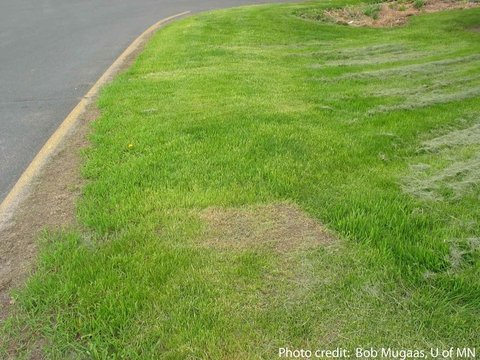
Recurring bare patches — especially in areas that seem to get enough sun and water — often point to compaction or scalping rather than disease or pests. Scalping happens when the mower deck sits too low and removes too much of the grass plant in one pass, cutting into the crown and killing the grass at the root level.
Scalping tends to happen at the edges of the lawn, over slight rises in the terrain, or when cutting wet grass that lies flat before springing back up after the mower passes. Raising the deck height slightly and mowing when the grass is dry resolves most scalping issues.
If scalping is happening because of an uneven or damaged mower deck, learning how to sharpen mower blades is a practical first step — but it’s also worth checking the deck for levelness and the wheels for even height settings, since a blade that cuts unevenly on one side will create strip patterns and recurring thin spots.
Bethel Power Equipment walks through the full process of blade maintenance and deck adjustment in clear, step-by-step detail — useful whether you’re troubleshooting recurring patches or just establishing a better maintenance baseline for the season.
5. Growth Patterns Are Uneven Across the Lawn
If one section of your lawn is noticeably taller or thicker than another after mowing, and the difference isn’t explained by shade, water, or soil variations, the mower itself may be cutting inconsistently. Uneven deck height, a bent blade, or worn wheel axles can all create strip patterns or sections that get cut shorter than others.
According to the University of Minnesota Extension, mowing height is one of the single most important factors in long-term lawn health — and inconsistent height across the mowing path is a key sign that equipment maintenance has fallen behind. Their research consistently shows that lawns mowed at the correct height for the grass species are significantly more resistant to drought, disease, and weed pressure.
If your mower is leaving an uneven cut, check the blade balance after sharpening and inspect the deck for any warping or damage. A mower that cuts well on the right side but leaves longer grass on the left is usually a blade or deck calibration issue, not a grass problem.
What to Do When You Spot These Signs
Most of what your lawn is communicating comes down to a handful of fixable issues: blade sharpness, cutting height, mowing frequency, and equipment calibration. None of these require expensive solutions. They require attention.
Start by inspecting your blade. A blade sharpened at the beginning of the season but never touched again is almost certainly dull by midsummer. Then check your deck height settings — many homeowners have never adjusted them from the factory default. Finally, look at your mowing frequency relative to actual growth rate rather than a fixed schedule.
Final Thoughts
Your lawn doesn’t need perfection — it needs the right conditions to thrive. When it starts showing stress signals, the temptation is to add more: more water, more fertilizer, more treatments. But often the answer is simpler. Adjust the routine, maintain the equipment, and let the grass do what it’s already trying to do.
Pay attention to what the lawn is telling you, and it will reward you with a lot less effort than you’d expect.
Leave a Reply