
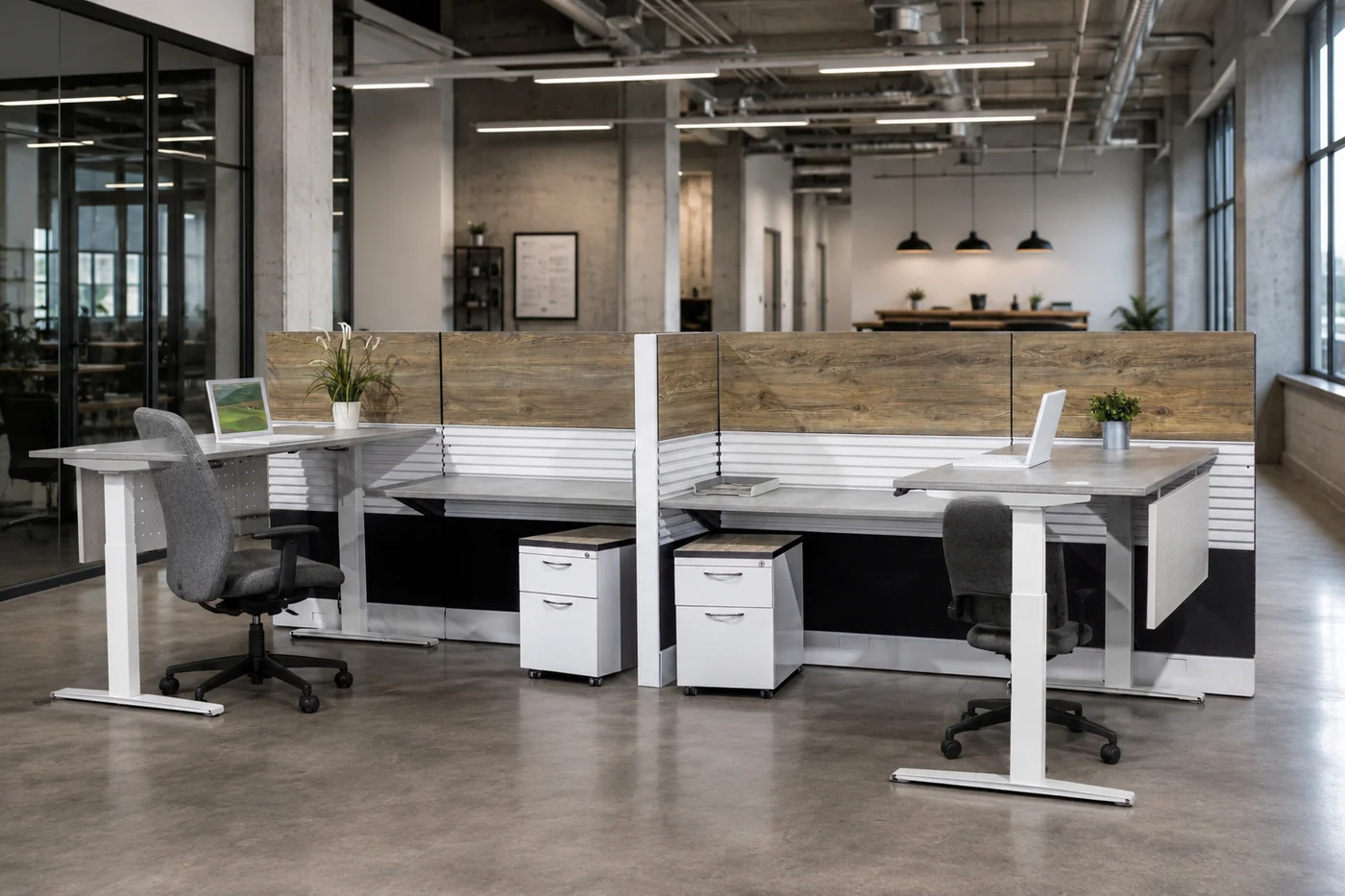
The corner desk behind our couch spent its first winter as a laundry pile. Not dramatic, just true. Then school projects started landing there, my husband’s laptop joined the heap, and I realized we weren’t short on space. We were short on a plan.
Most families don’t need a whole room for paperwork, bills, and homework. A single well-placed corner handles all of it, as long as the piece under your elbow can survive juice cups, elbow grease, and a nine year old doing math on top of it. That’s why older, heavier office workstations keep showing up in family homes again, the kind built from steel and solid wood instead of particleboard games. They’re usually a leftover from an office liquidation, and they end up being the sturdiest thing in the house.
Why the Corner Beats a Spare Bedroom
Here’s the part I wish someone had told me before we painted a whole guest room “office beige.” A separate room sounds luxurious until you remember you’d have to walk past three loads of unfolded laundry to use it. We did that for a year. Nobody went in.
A corner in a shared room wins because it’s unavoidable. You pass it on the way to the kitchen, so a bill gets paid instead of buried. Your kid knocks out spelling homework while you answer email, and nobody has to relocate to a different floor of the house. The catch is that a corner is exposed. A bedroom door hides mess. A corner doesn’t. That’s exactly why the furniture has to hold up and the setup has to be simple enough to reset in five minutes before dinner guests arrive.
What to Put in the Corner
Measure first, and don’t skip this. Grab a tape measure and check the width from wall to wall, then subtract a few inches so you can actually reach the back edge. I’ve watched too many families buy the biggest desk that fit the gap and then hate it because the printer lived on the floor.
Then think about what the corner needs to do. In our house it does three jobs: pay bills, do homework, and hold a printer that only works on Tuesdays. Yours might add a sewing machine, a fish tank, or whatever hobby just moved in. Write the list down before you shop, because stores sell desks and your corner needs a workstation.
- One main surface wide enough for two people side by side
- A second, smaller surface for the printer or laminator
- Something with shelves, so paper and cords leave the desk
- A chair that tucks fully under, not awkwardly sideways
- One bin for trash and one box for “handle this week”
Heavy steel-framed pieces earn their keep here. Family life is rough on furniture, and a surface that flexes under a heavy binder is a surface that’s going to wobble within a year. Industrial workstation desks usually come as two-packs or side-by-side units for exactly this reason, since they were designed for floors where multiple people share one long surface. In a house, that same idea works for two kids working on homework at once, or for one adult who spreads out like they’re staging a raid.
Light, Air, and the Stuff Nobody Thinks About
Nobody talks about the lamp until they’re squinting at a form at nine at night. Put a light directly over or just beside the main surface, not behind your head, because backlighting turns your own shadow into a paperweight. A simple adjustable task lamp beats a fancy one with three touch settings you’ll never use.
Airflow matters more than people admit. If your corner sits under a vent, move the paper stack, or you’ll be chasing receipts across the floor every time the heat kicks on. According to guidance from the U.S. Environmental Protection Agency’s Energy Star program, home electronics and small appliances run better when they aren’t crammed into enclosed, poorly ventilated spaces, which explains why that printer living in a cabinet overheats. Give it breathing room on an open shelf instead.
Cords are the other thing. A surge protector taped to the underside of the desk changed our corner from “let’s not talk about it” to “oh, that’s nice.” Nobody trips over anything, and the toddler can’t reach the outlet.
The Five Minute Reset
Every family corner fails for the same reason, which is that it slowly becomes a landing pad for mail, keys, and whatever came out of a backpack. Ours did. Twice. So we built a reset routine.
- Clear anything that isn’t a tool, a device, or current paperwork.
- Wipe the surface with a damp cloth. Solid wood takes a light wipe and moves on.
- Return the printer paper to its shelf, not the middle of the desk.
- Open mail, act on it, and drop the trash directly into the bin.
- Push the chair in all the way.
Five minutes, tops. If a reset takes longer than that, the corner has too much stuff in it, and no amount of furniture will fix a storage problem. This is the part where I’ll pick a side: I’d rather have fewer things on a heavy desk than a flimsy drawer tower stuffed to the handle. Drawers invite clutter in a family home.
Buying Once Instead of Three Times
The real cost of cheap home office furniture isn’t the price tag. It’s buying it again in eighteen months when the veneer peels or the legs splay. Families already replace enough things. A sturdy secondhand workstation, or a new one built to commercial standards, tends to outlive a whole phase of your kids’ lives, which means you stop shopping and get back to whatever your Tuesday actually needs.
When you’re comparing options, look at how the surface is attached to the base and how thick the framing is. Mass-market desks often use thin metal and a hollow core. Commercial office furniture, the kind designed for an office floor with fifty people on it, is built to the expectations laid out by the U.S. General Services Administration, the agency that sets durability and purchasing standards for furniture bought by government offices. That’s a useful benchmark even in a house, because if a piece is built to survive an office, it’ll absolutely survive a fifth grader.
One more thing worth copying from the office world is how the setup treats the person, not the room. Simple ergonomic habits matter when a corner doubles as a homework station and a bill-paying desk, and the Cornell University Ergonomics Web remains a free, plain-language resource for arranging a screen, a chair, and a surface so a long afternoon doesn’t wreck your neck. You don’t need a certified setup at home, but you do need the screen roughly at eye level and your feet touching something.
Making It Yours Without Overthinking It
Industrial furniture doesn’t need a matching aesthetic to work in a family room. It reads as garage shop, loft, or, frankly, whatever you put around it. Toss a woven basket next to it and it looks intentional. Add a cork board and it looks like a command center. Skip both and it still holds up.
The best version of this corner is the one that survives a school year. That means a surface you don’t have to baby, storage that gets paper off the top, and a five minute reset you’ll actually do. If you’re starting today, measure the gap, make your three-job list, and look at pieces built for real work instead of catalog photos. Your future self, the one squinting at a permission slip at nine at night, will thank you.
Leave a Reply