
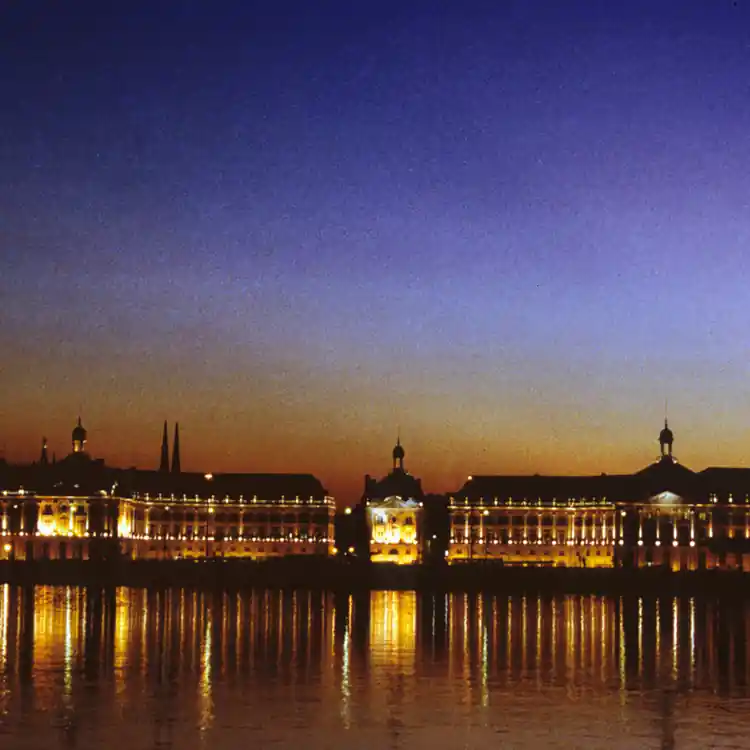
Ever wandered through a beautiful old city center and wondered what stories were hiding behind all those elegant stone facades? Or wished someone could point out the details a guidebook always seems to skip?
Bordeaux’s historic center isn’t just pretty to look at. It’s recognized by UNESCO as a World Heritage Site, one of the largest urban areas ever given that designation. Walking through it without context means missing most of what actually makes it special, which is exactly why a free walking tour tends to be the smartest way to experience it.
Why Bordeaux’s Old Town Earned UNESCO Recognition
Bordeaux’s historic center was inscribed as a UNESCO World Heritage Site in 2007, recognized for its exceptional urban and architectural ensemble shaped by 18th century town planning. According to UNESCO’s own listing, the site spans roughly 1,810 hectares of the city and includes 347 protected buildings, making it the largest urban World Heritage area in the world, reflecting more than 2,000 years of continuous history as a place of cultural and commercial exchange along the Garonne River.
That scale is part of the challenge for visitors. With that much history packed into one walkable area, it’s easy to pass right by details that actually explain why the city looks the way it does, and why so much of it has stayed remarkably intact for over two centuries.
How a Walking Tour Actually Shows Off the Old Town
This is really the heart of it. A good guide does more than point at buildings. They explain why Bordeaux’s golden stone facades all share a similar style, why certain squares were designed the way they were, and how the city’s wine trade shaped its wealth and architecture for centuries. That kind of context is exactly what turns a walk past old buildings into an understanding of how the city actually came together.
A few things a knowledgeable local guide typically brings to a walk through the old town:
- The history behind grand squares like Place de la Bourse and its famous mirror fountain
- Why so many buildings share the same limestone construction and classical facades
- Stories tied to the city’s river trade and its long relationship with wine
- Lesser known streets and courtyards that most self-guided visitors walk straight past
A well-planned route usually threads these points together without feeling rushed, often starting at Place de la Bourse, with its reflecting pool and 18th century facades, before continuing along the Garonne riverfront where the old port once handled the wine trade that built much of the city’s wealth. From there, routes often move toward Saint-André Cathedral and the surrounding medieval streets, which offer a different texture entirely, narrower, older, and layered with centuries of history that predate the grand 18th century redevelopment seen elsewhere in the city.
Why a Guided Walk Makes the Experience Richer
Self-guided visitors often stick to the same handful of landmarks because that’s what shows up in guidebooks and search results. A guide’s knowledge tends to go much deeper, connecting one building to the next in a way that turns a walk into an actual narrative rather than a checklist of photo stops.
For travelers wanting a well-paced, well-explained introduction to the city, joining a Bordeaux Free Walking Tour is a straightforward way to see the UNESCO old town with someone who can explain what’s actually in front of you, rather than piecing it together from a map and a phone.
Tips for Getting the Most Out of Your Walk
A few small things make a big difference on a walking tour through a historic center like this:
- Wear comfortable shoes, since old town streets are often cobblestone
- Bring a water bottle, especially during warmer months
- Arrive a few minutes early to meet the guide and settle in before the group sets off
- Ask questions along the way, since guides often know far more than fits into the standard route
A little preparation like this makes it easier to actually focus on the stories and details, rather than being distracted by sore feet or a forgotten water bottle halfway through.
Conclusion
Bordeaux’s old town is dense with history in a way that’s genuinely hard to appreciate without context. A free walking tour turns an already beautiful city into something far more meaningful by connecting its elegant architecture, thriving river trade, and centuries of cultural and political history that earned it UNESCO World Heritage status.
Along the way, guides often share local stories and historical details that are easy to miss when exploring on your own. For visitors with a few hours to spare, it’s one of the best ways to understand how Bordeaux evolved into the city it is today, rather than simply admiring its streets and landmarks from the outside.
Leave a Reply