
Most pest infestations don’t announce themselves. You don’t hear a knock. You don’t get a warning. One Tuesday morning you spot a mouse dropping behind the toaster, and suddenly you’re wondering how long you’ve been sharing your kitchen.
That slow reveal is exactly what makes pest problems so frustrating for homeowners. By the time you notice something obvious, the infestation is rarely new. Catching the early signals, knowing what they mean, and having a clear plan of action can save you thousands in structural damage and a lot of lost sleep.
Why American Homes Are So Vulnerable
Pest pressure is not a fringe problem. According to a report from the U.S. Census Bureau, residents of about 14 million housing units reported seeing roaches in their homes in a 12-month period, and nearly 14.8 million reported seeing rodents during the same timeframe. Those numbers come from the 2021 American Housing Survey, published by the U.S. Census Bureau, and they cover occupied homes across the country, not just older or neglected properties.
For homeowners in warmer climates like Southern California, the situation is more persistent. Mild winters mean insects and rodents never fully go dormant. The seasonal die-off that resets pest populations in colder states simply doesn’t happen here, so pressure builds year-round. Knowing what to look for is the first line of defense.
The SEED Method: A Simple Framework for Reading Your Home
Most pest guides hand you a generic list of “signs.” What’s more useful is a structured way to inspect your own home so you catch problems early and in the right order. I call it the SEED method, and it covers the four categories where early evidence almost always shows up first.
- Structural clues. Look for small holes, gnaw marks on baseboards, chewed wiring insulation, or soft spots in wood near windows and door frames. Termites and rodents both leave structural evidence before they leave visible bodies.
- Entry points. Walk the exterior perimeter. Check where pipes, cables, and vents enter the wall. A gap as narrow as a quarter-inch is wide enough for a mouse. Caulk gaps immediately when you find them, and flag anything larger for a professional assessment.
- Evidence of activity. Droppings, shed skins, grease trails along baseboards, egg casings behind appliances, and silk webbing in corners are all activity markers. Fresh droppings are moist and dark. Old ones are dry and gray. That difference tells you whether you have an active infestation or a resolved one.
- Damp zones. Pests need water more urgently than they need food. Leaky under-sink plumbing, condensation around AC lines, and pooled water near the foundation pull cockroaches, silverfish, and ants in reliably. Fix moisture before you fix anything else.
Run this four-point check twice a year at minimum: once before summer (when pest season peaks) and once heading into fall (when rodents start looking for warmth indoors).
What Different Pests Actually Leave Behind
Not every warning sign means the same thing. Matching evidence to pest type helps you respond correctly instead of throwing general-purpose sprays at a problem that needs targeted treatment.
| Pest | Primary Warning Signs | Common Hiding Spots
|
|---|---|---|
| Cockroaches | Oval egg casings, musty odor, dark droppings near appliances | Under refrigerators, inside cabinet hinges, near water heaters |
| Rodents (mice/rats) | Gnaw marks, grease smears on walls, cylindrical droppings | Attics, wall voids, spaces behind stoves |
| Termites | Mud tubes on foundation, hollow-sounding wood, discarded wings | Subfloor joists, wall framing, wood near soil contact |
| Ants | Foraging trails, small soil mounds, frass piles (carpenter ants) | Wall voids near kitchens, under slabs, landscaping edges |
| Spiders | Irregular webs in corners and voids, shed exoskeletons | Garages, undisturbed storage boxes, crawl spaces |
One sign worth calling out separately: mud tubes. If you spot pencil-thin mud tunnels running up your foundation wall or across concrete, that’s a near-certain termite indicator and it warrants a professional inspection the same week, not the same month.
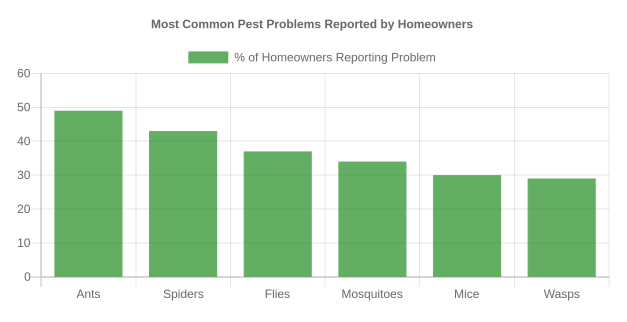
Chart data sourced from a national homeowner survey reported by NBC News.
A Real Scenario: What “Early” Actually Looks Like
Picture a homeowner in Corona, California, heading into August. She notices a faint musty smell near the kitchen sink and spots two small droppings on the shelf under the cabinet. No visible pest. No obvious damage. Most people would wipe it down and move on.
That’s the critical mistake. Those two droppings are evidence of an active rodent presence, which typically means more than one animal and a nest somewhere close. Within three weeks of ignoring early droppings, that same homeowner could be dealing with chewed pantry packaging, contaminated food, and a nest inside the wall cavity. Calling a qualified exterminator corona residents trust at the first sign of activity is dramatically cheaper than addressing a fully established infestation six weeks later.
The point isn’t to panic at every spider web. It’s to treat small, clear evidence as a legitimate signal worth acting on, because it almost always is.
DIY vs. Professional Treatment: Where the Line Is
Some pest problems genuinely respond to DIY. Sealing entry points, setting snap traps for an isolated mouse, or applying gel bait to a small ant trail are all reasonable first moves. The honest ceiling on DIY is single-source, early-stage problems.
Once any of these conditions apply, call a professional: you’ve found droppings in more than one room, you’ve spotted a mud tube or hollow wood, you’ve treated twice without results, or you genuinely don’t know what pest you’re dealing with. Misidentifying the pest is the most expensive DIY mistake, because the wrong treatment either fails entirely or pushes the colony to relocate deeper into the structure.
The pest control workforce exists precisely for this complexity. According to the U.S. Bureau of Labor Statistics, employment of pest control workers was projected to grow 7 percent over a recent decade-long period , reflecting steady demand driven by homeowners who recognize the limits of over-the-counter solutions. You can find current occupational data on pest control workers through the BLS Occupational Outlook Handbook. Professionals are trained to identify pest species accurately, locate harborage sites you can’t see, and apply treatments that don’t just mask the surface problem.
“Professional pest control specialists have training and expertise that help them address the true causes of an infestation, rather than the symptoms, leading to longer-term relief than many DIY methods.” Consumer Affairs pest control analysis, 2024
What to Do Right Now
Run the SEED check this week. Take photos of anything that looks off. Pull the refrigerator away from the wall. Open the cabinet under the bathroom sink and shine a flashlight around. Check the garage baseboards. Look at your foundation line from outside.
If you find nothing, great. You’ve confirmed your home is clean and you’ll feel better for having checked. If you find something, you’ve caught it early, which is the best possible position to be in. The only version of this story that ends badly is the one where you notice something and wait.
What small sign have you been ignoring in your own home?
Leave a Reply