
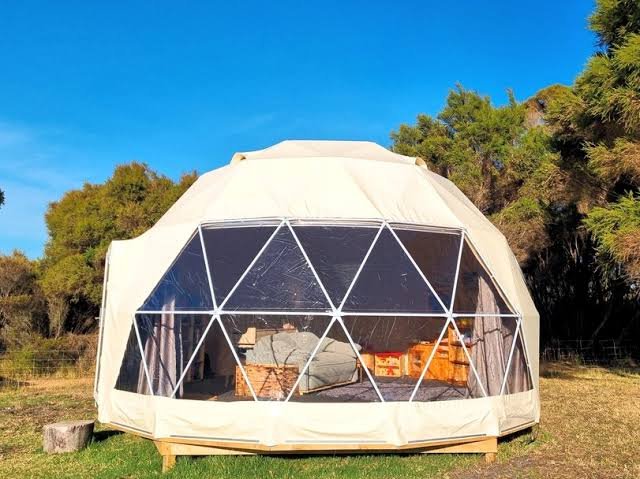
Rising housing costs and long approval timelines have pushed more Australians to rethink what “owning a place of your own” actually requires. Living independently from the grid, once seen as a fringe lifestyle, has become a genuinely practical option for people who want their own space without waiting years or spending a fortune to get there.
A traditional self-sufficient build usually means council approvals, tradies, and months, sometimes years, before you can move in. A yurt skips most of that timeline entirely, which is a big part of why it’s become such a popular path to a private retreat people can genuinely complete themselves.
The Myth That Keeps People From Starting
Most people assume that a simple, self-sufficient retreat should be quick and cheap to build, since it doesn’t need to match the scale of a full house. In practice, that assumption rarely holds up once the planning actually starts.
Tiny homes need engineering sign-off and, depending on the state, formal planning approval before anyone breaks ground. Shipping container conversions need structural modification to make the space livable. Standard cabins need tradies for framing, plumbing, and electrical work before a single night can be spent inside.
How Yurts Skip the Usual Delays
A yurt isn’t just smaller than a house, it’s built around a completely different assembly logic. That difference is what actually changes how quickly someone can move in.
1. Quicker Assembly
A yurt frame goes up using pre-cut lattice walls, a central ring, and rafters that click together without specialist tools. Most kits are designed so a small group of people, not a trade crew, can complete the frame and cover in two to three days. That removes the biggest bottleneck in a conventional build: waiting on scheduled trades before the next stage can start.
2. Lower Maintenance Than Many Cabins
A yurt’s outer cover is replaced as a single unit roughly every seven years, rather than needing the ongoing repainting and resealing a timber cabin demands. Because the frame is simple and mostly exposed, spotting wear is far easier than diagnosing a problem hidden inside a conventional wall. Upkeep mostly comes down to checking the cover and clearing the surrounding area, not a long list of seasonal jobs.
3. A Smaller Environmental Footprint
A yurt uses far less raw material than a framed house of the same size, with no full timber stud wall, plasterboard, or poured concrete slab in most setups. Its round shape also needs less material to enclose the same floor space compared to a rectangular structure. For anyone weighing the environmental cost of a new build, that’s a straightforward advantage.
4. Easier to Expand Later
Because a yurt stands as its own independent structure, adding a second one nearby is far simpler than extending a fixed house. There’s no need to tie into existing framing, plumbing, or wiring the way a home extension usually requires. This makes it realistic to start with one yurt and add more later, rather than committing to a final footprint on day one.
5. Genuinely Flexible in Purpose
The same basic structure works equally well as a bedroom, studio, office, or guest space, without any structural changes required. Moving furniture and swapping the use of a yurt is far simpler than reworking a purpose-built room in a house. That flexibility means the same investment can shift to match your life as it changes.
6. Encourages a Simpler Lifestyle
A smaller, single-room structure naturally limits how much you accumulate, simply because there’s less space to store it in. Many people who move into a yurt report spending less time on upkeep and more time using the space around them. Over time, that shift tends to encourage a lifestyle built around fewer, more deliberate choices.
Who Gets the Most Value Out of a Yurt
A yurt suits a surprisingly wide range of people, each for a different reason. Weekend adventurers get a real base camp on their own land instead of relying on rentals or camping gear. Remote workers use the same structure as a quiet, separate office close to home. Retirees get a simpler, smaller footprint without giving up comfort, while tiny-home enthusiasts get the same minimal design philosophy they already value, just faster to build.
Families get an affordable vacation property without the delays of a conventional build, and anyone unsure about committing to life off the grid gets a low-risk way to actually try it first. If you’re weighing up a yurt against a more conventional build, this flexibility is often the deciding factor.
Yurt in the Dirt has built its entire model around exactly this kind of use case, offering pre-engineered kits designed for fast, DIY assembly across everything from personal retreats to small glamping businesses.
Things to Consider Before Buying a Yurt
A yurt is a significant purchase, and a handful of practical questions are worth answering honestly before placing an order.
- Local council rules: Regulations for temporary or seasonal structures vary significantly by area, so it’s worth confirming what’s actually permitted before buying anything.
- Climate and conditions: Wind rating, insulation, and ventilation needs differ depending on how extreme your local weather actually gets, so not every yurt is built for every location.
- Intended use: A full-time home, a weekend retreat, and a small business space all call for different sizes and features, so it’s worth being clear on the purpose upfront.
- Site preparation: A yurt needs a proper deck or base platform ready before assembly, which is often a bigger factor in timeline and cost than the yurt itself.
- Long-term budget: Beyond the initial purchase, factor in the eventual cost of replacing the outer cover, typically needed after several years of use.
Getting clear on these before buying is what actually determines whether the yurt fits your life, not just your land.
Are Yurts Actually Comfortable?
Modern yurts are built with real insulation, proper ventilation, and weatherproof covers, so daily life inside one feels far closer to a well-built cabin than a tent. Wood stoves, electricity, and even plumbing can all be added, meaning most of the comforts of a standard home are entirely possible inside the same round frame.
The open, circular layout also tends to feel more spacious than the square footage suggests, with natural light pouring in from a central dome and walls that curve rather than box the room in. For many people, that airy, connected feel becomes one of their favorite parts of living in one, not just a compromise they’ve learned to accept.
Final Thoughts
For anyone weighing the years-long timeline of a conventional self-sufficient build against something they could finish in a weekend, the appeal of a yurt goes well beyond aesthetics. It’s a structure built specifically to compress the gap between deciding you want a private retreat and actually living in one.
Sometimes the fastest way to get somewhere isn’t a shortcut, it’s simply choosing a structure that was never designed to be slow in the first place.
Leave a Reply